A rug is the single most effective thing you can add to a finished Indian home. It defines a seating zone, absorbs the echo that hard surfaces create, and adds the warmth that stone and tile cannot. It is also the item most often bought in the wrong size.
Here is how to choose rugs and carpets for an Indian home — the sizing rules, the materials that survive here, and the mistake almost everybody makes.
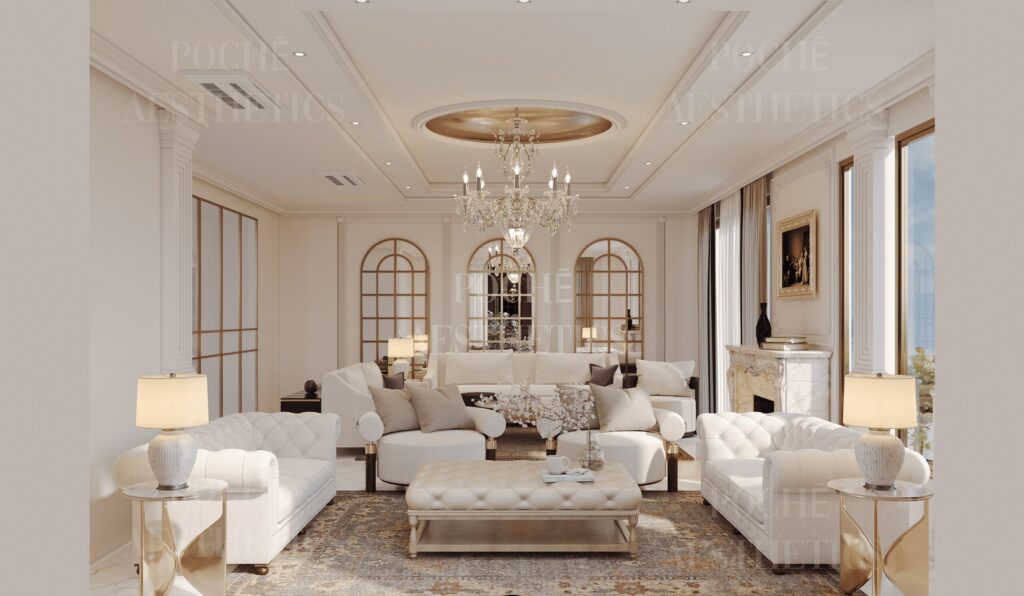
The mistake: buying too small
This is the error in most Indian living rooms. A rug floating in the middle of the floor with all the furniture standing around it on bare stone makes the room look smaller and the arrangement look unresolved.
The rule: at minimum, the front legs of every seat should sit on the rug. Better still, all legs on. A rug that touches the furniture connects the group; one that does not is a mat.
If the budget will not stretch to the right size, a larger rug in a cheaper material beats a small rug in an expensive one. Size does more work than quality here.
Sizing, room by room
Living room: the rug should extend at least 200mm beyond the sofa at each end. For a standard three-seater arrangement that usually means 8×10 feet; for a larger room, 9×12. Leave roughly 300–450mm of visible floor between the rug edge and the walls — a rug that runs wall to wall is a carpet, which is a different decision.
Dining room: the rug must extend 600mm beyond the table on every side, so chairs stay on it when pulled out. A chair with its back legs off the edge catches every time. For a six-seater this means 8×10 feet minimum.
Be honest about whether you want a rug under a dining table at all. In a household that eats Indian food daily, it is a commitment.
Bedroom: three options that work. A large rug under the bed extending 600mm beyond on three sides; a smaller rug across the foot of the bed; or runners down each side. What does not work is a small rug at the foot that nobody’s feet ever land on.
Entrance: a recessed mat well at the door, then a runner or small rug beyond it. Keeps grit off everything else.
Materials, and how they behave here
Wool — the default for good reason. Durable, resilient, naturally resists dirt, feels excellent underfoot and ages well. Hand-knotted or hand-tufted. It sheds for the first few months, which is normal and alarming if nobody warns you.
Silk and viscose — beautiful lustre, and genuinely delicate. Viscose in particular marks permanently from water, which means any spill is a problem and a humid Delhi monsoon is not its friend. Superb in a formal room nobody eats in; a poor choice in a family living room.
Cotton and flatweave (dhurrie) — light, washable, inexpensive, and very well suited to Indian homes. Less luxurious underfoot, far more practical. Excellent in bedrooms and children’s rooms.
Jute and sisal — texture and warmth at low cost, and they suit a contemporary Indian palette. Rough underfoot and difficult to clean if something soaks in.
Synthetics and polypropylene — stain-resistant, washable, inexpensive. Honest workhorses for a children’s room or a high-traffic passage.
For most family homes we would specify wool in the main rooms and flatweave or synthetic where food, children or pets are involved.
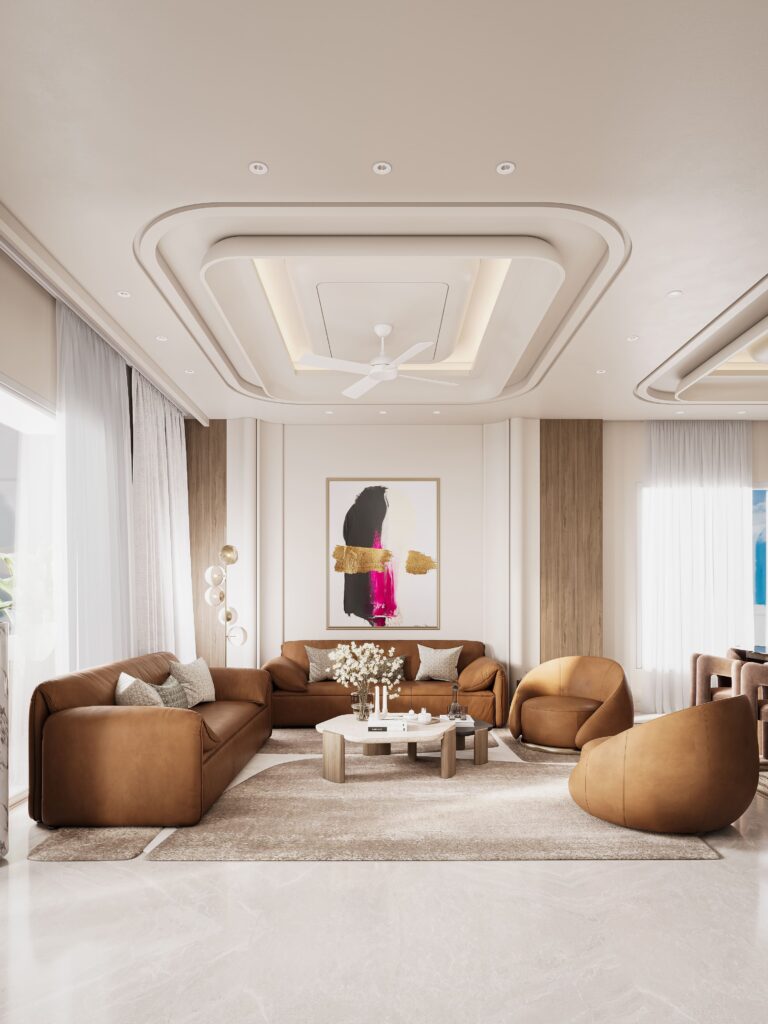
Pile height and construction
Low pile under dining tables and in passages — chairs move freely and it cleans easily.
Medium pile in living rooms, which is the best balance of comfort and maintenance.
High pile and shag feel wonderful and trap a great deal of dust. In Delhi, think hard before putting one anywhere other than a bedroom.
Hand-knotted is the most durable construction and the most expensive; a good one outlasts the house. Hand-tufted is the common mid-level choice — check that it has a decent backing, as cheap latex backings degrade and shed. Machine-made is fine for secondary rooms.
Living with rugs in Delhi
Use a rug pad. It stops slipping on stone and tile, which is a genuine safety issue, and it extends the rug’s life by absorbing impact. Cheap and almost always skipped.
Vacuum regularly but gently — avoid a rotating beater bar on hand-knotted wool.
Rotate it every six months or so, particularly if sunlight reaches part of it. Indian sun fades textiles faster than people expect, and an unrotated rug develops a visible line.
Deal with spills immediately — blot, never rub.
Professional cleaning every year or two for a good wool rug. Not a household job.
Choosing the pattern
A practical rule: if the room already has strong pattern — veined marble, a bold wallpaper, heavily figured timber — keep the rug quiet. If the room is largely plain, the rug is the natural place for pattern and character.
Traditional Indian and Persian designs are genuinely forgiving in daily life, because the pattern and the mid-tones hide a great deal. A plain pale rug in a family home is a beautiful decision you will be managing constantly.
And buy the rug for the room, not from a photograph. Colours read differently in Indian light, so see a sample in the actual space before committing.
Getting it right
We size rugs on the furniture layout rather than guessing at the end, and specify material against how the room will actually be used — because a rug is both the largest soft surface in a room and the easiest thing to get wrong by 300mm.
If you are finishing a home, tell us about it. See also how to make a home feel finished, living room planning, and choosing a colour palette.
About Pochē Aesthetics
Pochē Aesthetics — also written Poche Aesthetics — is a luxury residential architecture and interior design practice based in Greater Kailash, New Delhi, founded and led by architect Niyati Satsangi. Over more than twelve years the practice has designed private homes — farmhouses, villas, builder floors and apartments — across Delhi NCR and India, handling architecture, interiors, materials, lighting and styling as one connected commission, alongside select restaurant and commercial work. More about the practice.