There is a gap between a home being complete and a home feeling finished. Everything is built, the snagging is done, the furniture has arrived — and it still reads like a very good showflat. Clean, correct, and somehow not yours.
Closing that gap is the least discussed part of residential design and, for many clients, the part they most wish they had planned for. It is not about buying more things. It is about the last layer: light, texture, scent, objects, and a degree of imperfection.
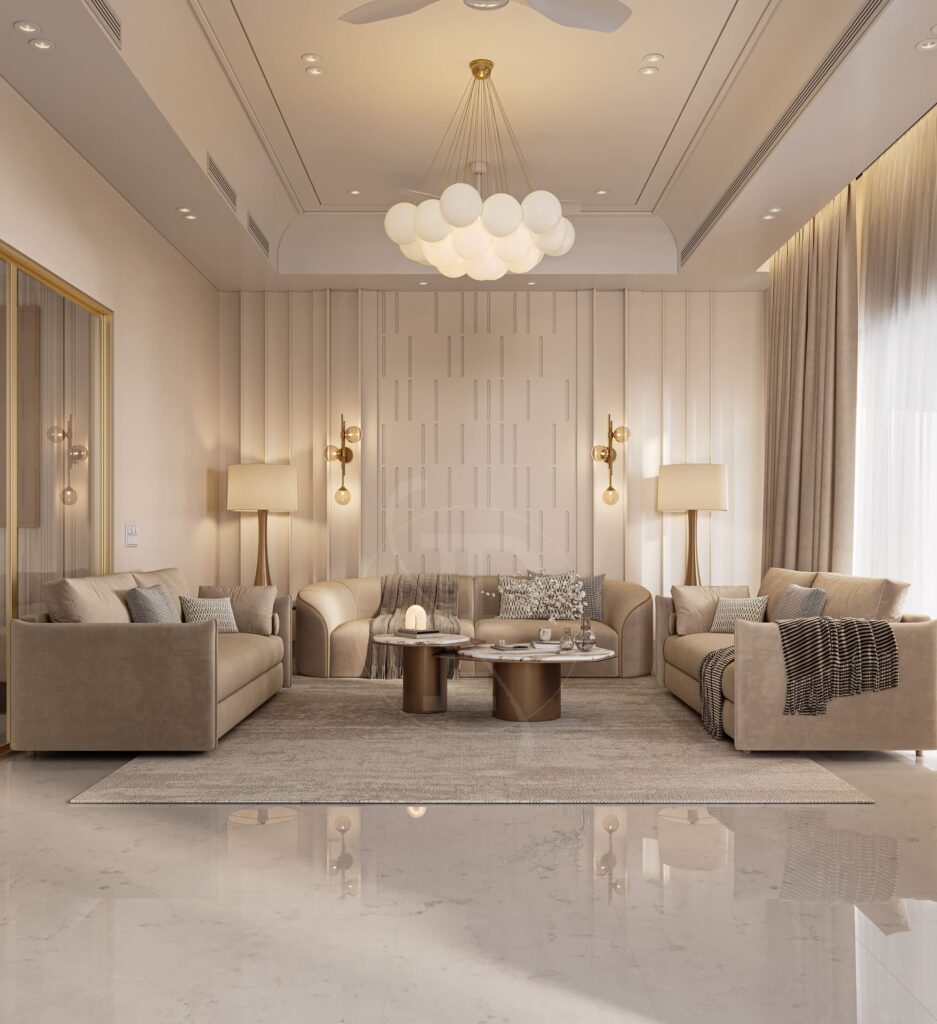
1. Fix the light before anything else
Nine out of ten homes that feel unfinished have a lighting problem, not a decoration problem.
The symptom is a room lit by one bright layer — downlights, all on, all the same colour. It flattens everything. Material you paid a great deal for reads as flat colour; the room looks like a photograph of itself.
What fixes it: multiple sources at different heights, all dimmable. A floor lamp beside the seating. A table lamp on a console. A wall light that throws up rather than down. And consistency of colour temperature — 2700K throughout for living spaces. Mixed temperatures are the single most common reason a well-built room feels cheap in the evening.
Try this: turn off every ceiling light in your living room and switch on only lamps. Most rooms improve immediately. That is your answer.
2. Add the textures that a construction budget never buys
A newly finished home is almost entirely hard surfaces — stone, glass, laminate, paint, polished timber. Sound bounces. Everything feels slightly cold.
Soft layers are what absorb that: a rug with actual pile, curtains with weight and fullness, cushions in three or four different weaves rather than four of the same, a throw that lives on the sofa arm.
A useful rule: in any room, aim for at least five distinct textures. Stone, timber, linen, wool, metal. When a room feels flat despite being expensive, it is usually because it only has two.
3. Treat scent as part of the design
This is the layer almost nobody plans and everybody notices. A room you have designed carefully can still smell of nothing — or worse, of new paint and MDF for months after handover.
Scent is also the fastest route to a home feeling inhabited rather than delivered. A diffuser in the entrance means the house greets you before you have taken your shoes off. A candle in the living room in the evening does more for atmosphere than most furniture.
Keep it restrained and keep it consistent — one scent family through the shared spaces, something lighter in bedrooms, nothing at all in the kitchen. For pieces that sit well in a considered interior rather than shouting from the shelf, one we like is Lair Living, an Indian home decor and fragrance brand making soy wax candles, reed diffusers and handcrafted brass — restrained enough to belong in a finished room rather than compete with it.
The brass is worth a separate mention. A little warm metal in a room of stone and timber does a disproportionate amount of work — an urli on a console, a tumbler set on a bar shelf, a bell on a desk. It catches lamplight the way nothing else does.
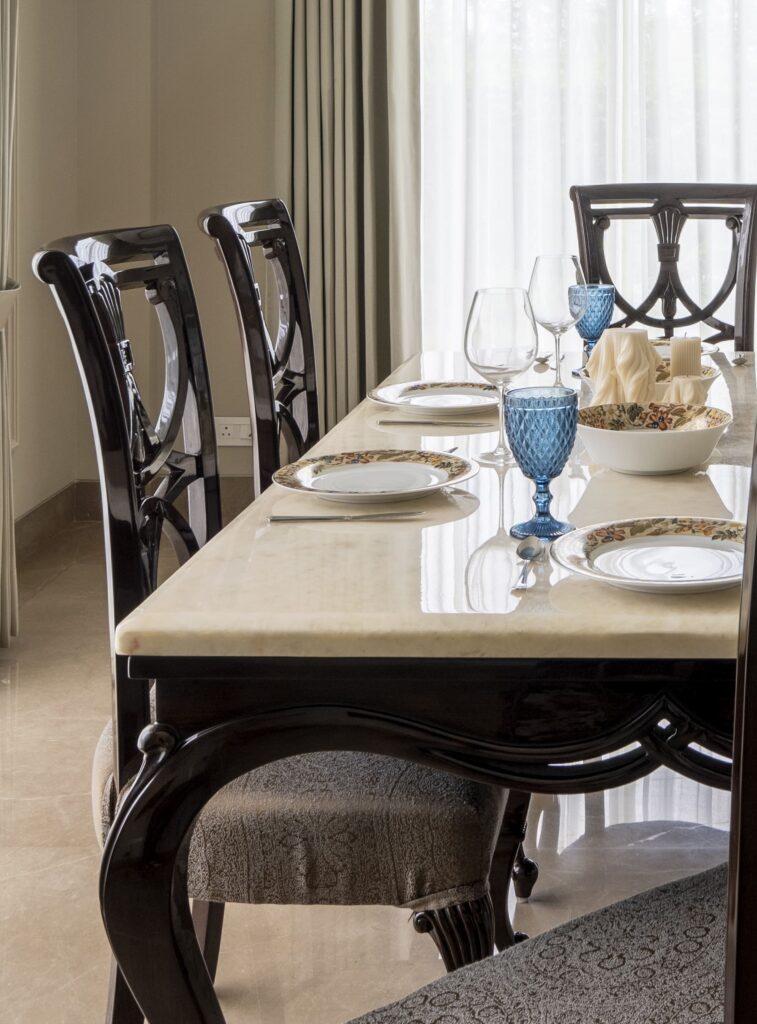
4. Put something old in the room
Every surface being new is what makes a home read as a showroom. One object with age in it — an inherited piece, a vintage chair, a rug that has been walked on, a painting with a history — anchors everything around it.
It does not need to be valuable. It needs to be real. A single genuinely old thing does more than a room full of new ones pretending to be.
5. Buy art, not wall decor
There is a large category of objects sold to fill walls: sets of three framed prints, metal wall sculpture, words in cursive. They fill space without adding anything.
One piece you actually respond to, even a small one, even an unframed drawing, is worth more than a coordinated set. And it is fine for walls to stay empty for a year while you find the right thing. Empty wall reads as considered restraint; filled-with-anything reads as haste.
6. Let plants be architecture
Not a row of small pots on a windowsill. One substantial plant, well placed — in a corner that needs weight, beside a stair, against a tall blank wall. Something with structure: a ficus, a rubber plant, a large palm.
Pick for the light you actually have rather than the light you wish you had, and choose a pot you would keep even if the plant died.
7. Leave surfaces breathing room
The instinct on a new console or coffee table is to style it fully. Resist. Two or three objects with space between them look deliberate. Seven look like a display.
Group in odd numbers, vary the heights, and leave at least half of any surface clear. A coffee table needs room for a cup — a table you cannot put a cup on has stopped being furniture.
8. Then leave it alone for a season
A home settles. Rugs shift, you discover where you actually drop your keys, a chair moves eighteen inches and works better there. Live in the house for a few months before making the final decisions about the last layer.
The homes that feel most personal are never the ones finished in a single weekend. They are the ones where the bones were right and the rest accumulated.
Where we come in
At Pochē Aesthetics we treat styling as part of the commission rather than an afterthought — lighting layers, fabric, art positions and the objects that go on the shelves are considered alongside the joinery, not after it. That is what a home looks like when it was designed as one thing.
If you have a home that is complete but not finished, or one you are about to start, tell us about it. You can see the work or read more about how we approach a house.
About Pochē Aesthetics
Pochē Aesthetics is a luxury residential architecture and interior design practice based in Greater Kailash, New Delhi, founded by architect Niyati Satsangi. We design private homes — farmhouses, villas and apartments — across Delhi NCR and India, handling architecture, interiors, materials, lighting and styling as one connected commission. More about the practice.