Yes — and it usually makes the home better, not worse. A room built around something you already own and love reads as personal. A room furnished entirely from one showroom in one afternoon reads as a showflat.
The honest caveat is that not everything should come. Here is how to decide what to keep, how to integrate it properly, and what is better let go.
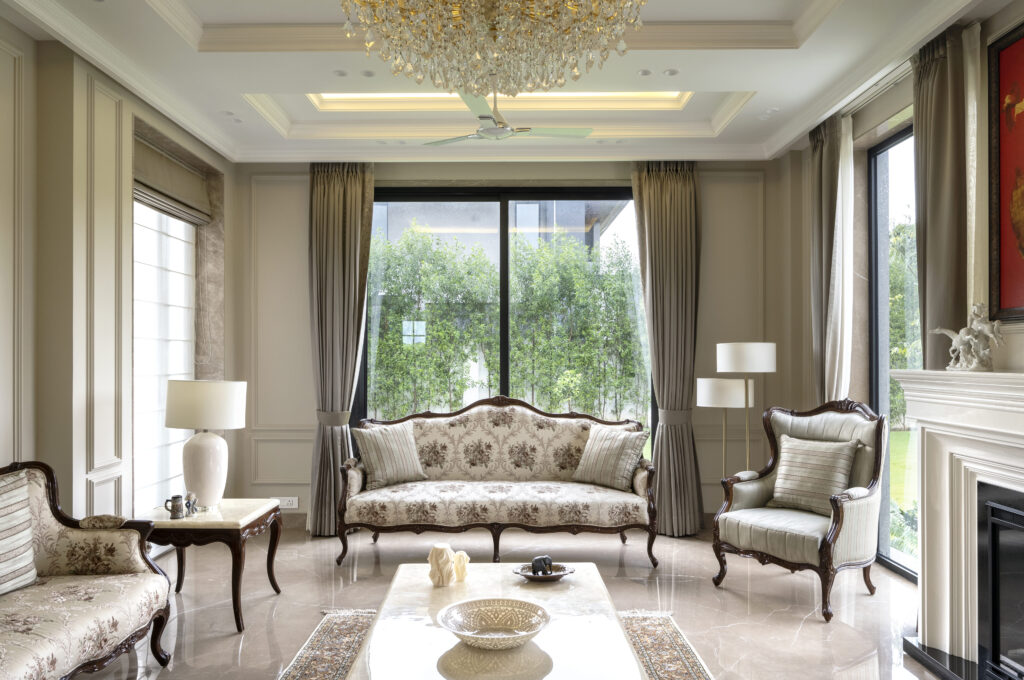
Why keeping things is usually the right instinct
Every surface being new is what makes a home read as a showroom. One object with age in it — an inherited chest, a rug that has been walked on, a painting with a history — anchors everything around it.
It does not need to be valuable. It needs to be real. A single genuinely old thing does more for a room than a coordinated set of new ones.
There is also a practical argument. Older Indian furniture is frequently built from solid timber with proper joinery, to a standard that costs a great deal to reproduce now. A heavy teak chest is usually a better object than its contemporary equivalent.
How to decide what stays
Four questions, in order:
1. Do you actually like it, or are you keeping it out of obligation? Inherited furniture carries weight, and some of it is kept from duty rather than affection. That is a legitimate reason to keep something — but it should be a conscious decision, and it is worth saying out loud rather than letting a designer guess.
2. Is it well made? Solid timber, proper joints, a frame that does not twist when you lift one end. Well-made furniture can be reupholstered, repolished and reused almost indefinitely. Poorly made furniture cannot be rescued by spending money on it.
3. Does it fit the new plan? Not emotionally — dimensionally. A nine-foot sofa in a room that can take seven is a problem no amount of styling solves. Measure before deciding.
4. Can it be adapted? Often more than people expect. A dated sofa with a good frame becomes a different piece entirely with new upholstery. A dark polished dining table can be refinished. Legs can be changed, tops replaced, chests repurposed.
What adapts well
- Solid wood case pieces — chests, sideboards, almirahs. Refinish, change the handles, and they look entirely current
- Sofas and armchairs with sound frames — new foam, new fabric, sometimes new legs. Often cheaper than buying equivalent quality new
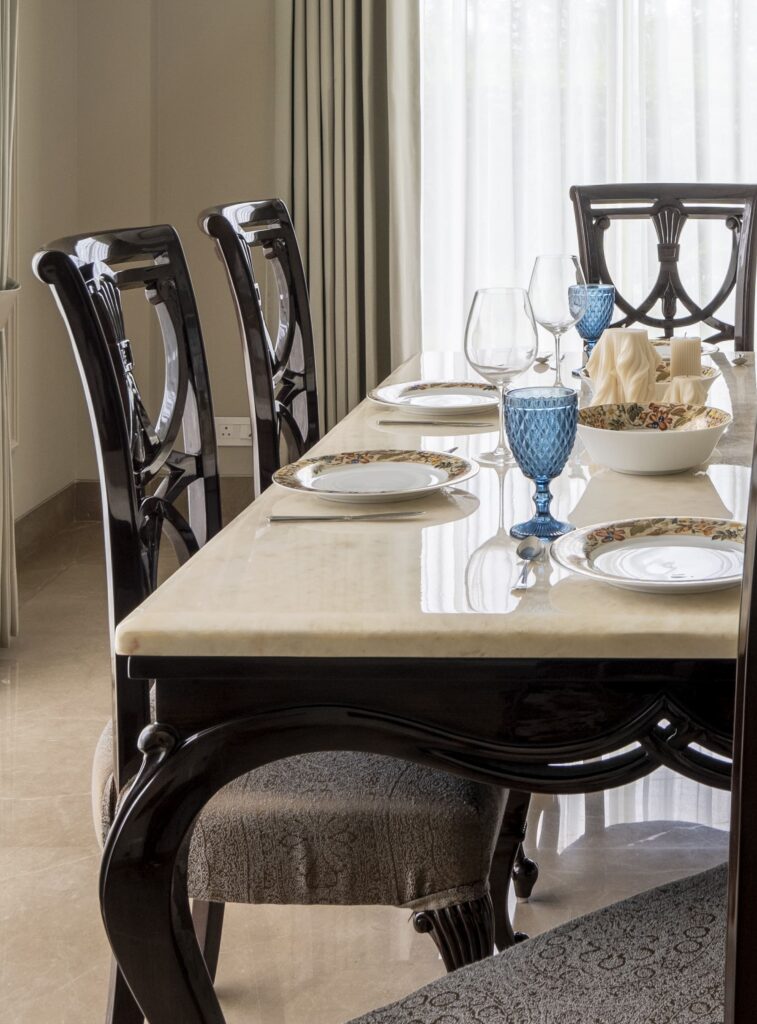
- Dining tables — refinishing a top transforms them. Pairing an old table with new chairs usually works better than the reverse
- Rugs — a good wool rug improves with age. Professional cleaning does a great deal
- Art and mirrors — reframing changes them completely
- Brass and metalware — which sit naturally in a contemporary Indian palette
What is usually better let go
Particle board and cheap engineered furniture. It does not survive dismantling and moving, and it cannot be refinished.
Anything structurally failing. A frame that twists, joints that have opened, veneer lifting across a surface. Repair cost exceeds value.
Pieces that do not fit the plan and cannot be adapted. Keeping a piece that forces a bad layout is the wrong trade.
Full matching sets. A seven-piece bedroom set in one finish is what makes rooms look like catalogues. Keep the one or two pieces worth keeping and let the rest go.
Things you have been storing for years and never used. If it has been in a loft through two homes, it is not coming back into use now.
How to integrate old and new without it looking accidental
This is where it either works or looks like a compromise.
Hold one thing constant. Usually the material palette or the proportional system. Variation then sits on top in fabric, art and objects, and the room reads as one idea with range rather than as indecision.
Give an old piece space. A good object crowded by new furniture disappears. Let it have a wall, or a corner, and light it properly.
Repeat a tone. If the inherited chest is a warm dark timber, let that tone appear once or twice more in the room — a frame, a lamp base, the legs of a chair. Repetition makes a piece look chosen rather than left over.
Do not try to match. Buying new furniture in the same finish as an old piece almost always exposes the difference. Contrast is more honest and reads better.
Reupholster to the new palette rather than keeping old fabric. The frame is the valuable part; the fabric rarely is.
Tell your designer at the start
This is the practical point. Pieces you intend to keep should be measured and included in the layout drawings from the beginning, not produced after the plan is fixed.
Photograph them, measure them, and say clearly which are non-negotiable and which are flexible. A designer can build a scheme around a piece they know about from day one. Retrofitting a large chest into a finished plan is considerably harder.
Frequently asked questions
Can an interior designer work with my existing furniture?
Yes, and most good ones prefer it. Tell them at the brief stage, with photographs and measurements, so the pieces are drawn into the layout from the start rather than fitted around a finished plan.
Is it cheaper to reupholster or buy new?
Reupholstering a sofa with a sound hardwood frame is usually less than buying equivalent quality new, and you keep a frame that may be better built than contemporary alternatives. It is not cheaper than buying a low-cost new sofa — but that is not the same comparison.
How do I mix old and new furniture without it looking mismatched?
Hold one thing constant — usually the material palette — and let variation sit in fabric, art and objects. Repeat the tone of an older piece once or twice elsewhere in the room. Do not try to match new furniture to an old finish; contrast reads better than a near-miss.
What should I not keep?
Particle board furniture, anything structurally failing, full matching sets, pieces that force a bad layout, and things you have stored unused through two homes.
Should I keep inherited furniture I do not like?
That is your decision rather than a design one, and it is worth being honest about. If a piece is kept from obligation, say so — a good designer can place it respectfully somewhere it works rather than building a room around something you would rather not look at daily.
Getting it right
We ask early what you own that matters and draw it into the layout from the start, because a home with something of yours in it is almost always better than one furnished entirely from scratch.
If you have pieces you want to keep, tell us about them. See also buying furniture, how to make a home feel finished, and rugs and carpets.
About Pochē Aesthetics
Pochē Aesthetics — also written Poche Aesthetics — is a luxury residential architecture and interior design practice based in Greater Kailash, New Delhi, founded and led by architect Niyati Satsangi. Over more than twelve years the practice has designed private homes — farmhouses, villas, builder floors and apartments — across Delhi NCR and India, handling architecture, interiors, materials, lighting and styling as one connected commission, alongside select restaurant and commercial work. More about the practice.