Furniture is usually the last big decision in a project and the one made with the least guidance. By then the budget is tired, the handover date is close, and the easiest path is to buy a room’s worth from whichever showroom has stock.
Here is how to think about buying furniture for a home — custom, branded or imported — what each is genuinely good for, and how to judge quality when every sofa in the showroom looks fine.
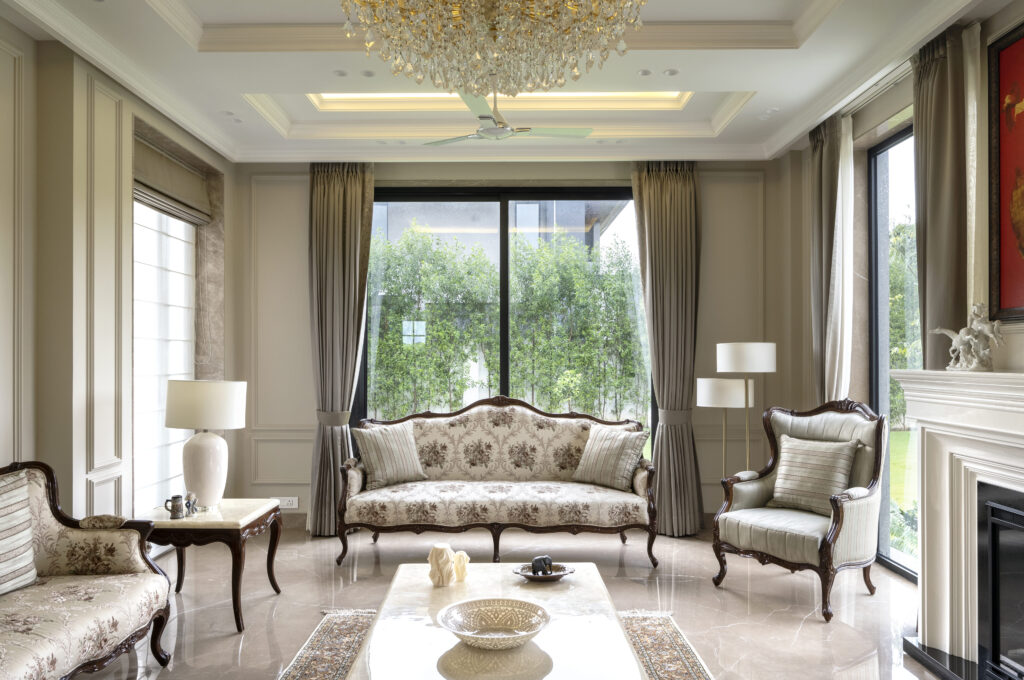
The three routes
Custom-made
Built to your drawing by a local workshop or upholsterer.
Good for: anything where dimensions matter — a sofa for an awkward room, a dining table for a specific length, a bed with a particular headboard. Also the only route if you want something that does not exist in a catalogue.
The risk: it is only as good as the workshop and the drawing. Without a proper specification you are relying on the maker’s judgement, and the result is unpredictable.
What to specify in writing: frame timber and whether it is kiln-dried, suspension type, foam density and layering, fabric and its rub count, leg construction, and the exact dimensions including seat height and depth.
Branded Indian retail
Established manufacturers with showrooms and warranties.
Good for: predictability. You can sit on it before buying, there is a warranty, delivery is defined, and if something fails there is someone to call.
The risk: standard dimensions, which may not suit your room, and a middle-of-the-road design language that ages quickly at the lower end.
Imported
Good for: design and engineering you genuinely cannot get made locally — particular mechanisms, particular proportions, pieces by designers whose work you want specifically.
The risk: lead times of three to five months, duty and freight, and the practical problem that a repair or a replacement part may take as long again. Also worth checking that upholstery suited to a European climate behaves in Delhi.
What we usually recommend
Mix by purpose. Custom for the pieces where fit decides everything — the main sofa, the dining table, the bed. Branded for dining chairs, occasional chairs and casegoods, where you want to test comfort and have a warranty. Imported for one or two pieces that genuinely cannot be matched locally.
Spending the whole budget in one category is almost always the wrong answer.
How to judge a sofa, which is the piece that matters most
Almost everything that determines a sofa’s life is invisible in a showroom. Ask these:
- Frame: kiln-dried hardwood, jointed and screwed, not stapled softwood or particle board. Lift one end — a well-built sofa is heavy and does not twist
- Suspension: eight-way hand-tied springs are the best; sinuous serpentine springs are a sound mid-level answer; elastic webbing alone will sag within a few years
- Seat foam: ask for the density. High-resilience foam holds its shape; cheap low-density foam flattens and is the most common complaint about Indian sofas
- Cushion construction: a foam core wrapped in fibre or feather gives both support and softness
- Fabric durability: ask for the rub count. Above 25,000 for family use. Performance fabrics are genuinely worth it with children
- Removable covers, if the household includes children or pets
And sit in it for several minutes, not several seconds. Seat depth is the thing people regret: a deep sofa is wonderful for lounging and uncomfortable for anyone who wants their feet on the floor.
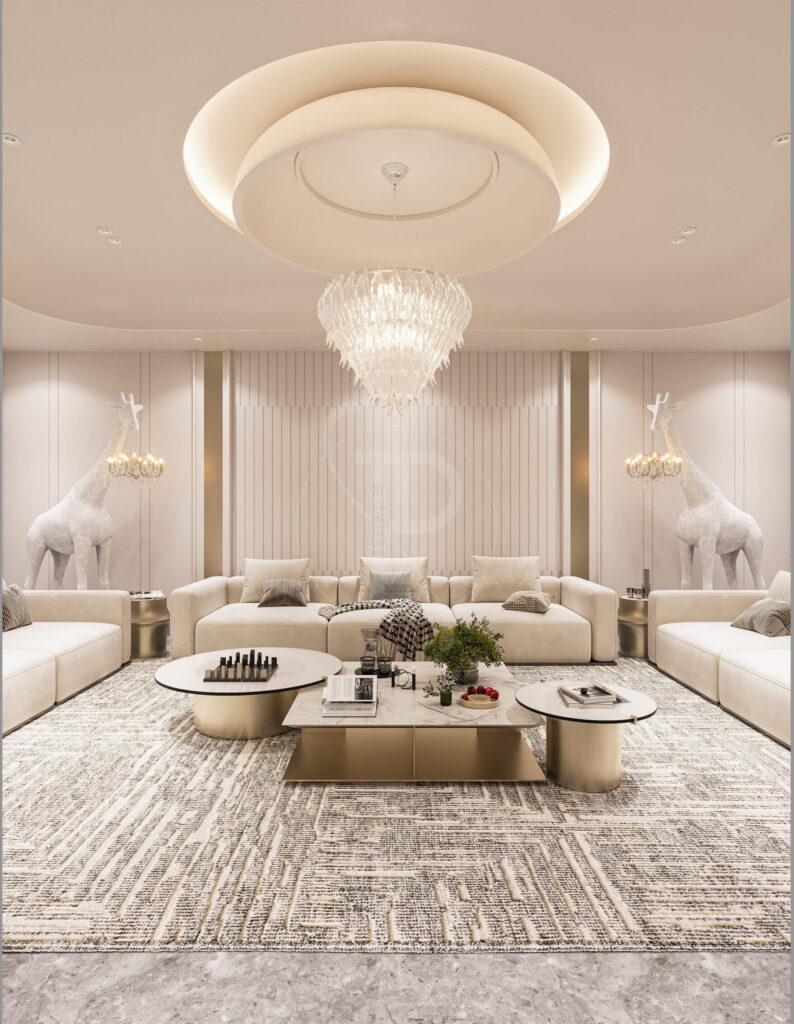
The dimensions that decide whether it works
- Seat height: 400–450mm. Sit down; your feet should rest flat
- Seat depth: 550–600mm for upright sitting; 650mm+ for lounging
- Between facing seats: 2,400–2,700mm for comfortable conversation
- Sofa to coffee table: 400–450mm
- Dining chair to wall: 750mm to sit, 1,050mm if someone must walk behind
- Dining table: 600mm of edge per person, 700mm to be comfortable
Measure the piece, not the photograph. And measure the route in — the lift, the stair turn, the door width. A sofa that will not reach the fourth floor is a genuinely common and entirely avoidable problem in Delhi apartments.
Buying for this climate
Solid wood moves with Delhi’s humidity swing. Kiln-dried timber and properly engineered joints matter more here than in a temperate climate.
Light-coloured upholstery in a dusty city is a commitment. Mid-tones and textured weaves hide far more than pale flat fabrics.
Leather behaves well but gets hot in summer and cold in January. Perfectly workable, just know what you are choosing.
Cane and rattan suit the climate and the aesthetic, and need occasional attention in humidity.
Avoid high-gloss lacquered surfaces on anything you touch daily.
Sequencing, and why it matters
Custom upholstery takes six to ten weeks. Imported pieces take three to five months. Both have to be ordered well before handover, not after.
The furniture sequence that works: decide the layout and dimensions at design stage, order long-lead and custom items as soon as the layout is fixed, buy branded items closer to completion, and let art, rugs and accessories accumulate afterwards.
Buying a whole house of furniture in one afternoon is how homes end up looking like showflats. The rooms that feel personal accumulated; they were not delivered.
Where to spend and where to hold
Spend on the pieces you use daily and physically touch: the main sofa, the bed and mattress, dining chairs. Frame and foam quality is not visible and is the whole of the value.
Hold on occasional pieces in rooms you rarely use, accent chairs bought for a corner, and anything bought to fill space rather than because you wanted it.
Getting it right
We draw furniture to scale in the layout with clearances checked, specify the pieces that need specifying, and sequence the ordering against the programme — because the most common furniture problem is not taste, it is a good piece in a room it does not fit.
If you are furnishing a home, tell us about it. See also living room planning, dining room design, and how to make a home feel finished.
About Pochē Aesthetics
Pochē Aesthetics — also written Poche Aesthetics — is a luxury residential architecture and interior design practice based in Greater Kailash, New Delhi, founded and led by architect Niyati Satsangi. Over more than twelve years the practice has designed private homes — farmhouses, villas, builder floors and apartments — across Delhi NCR and India, handling architecture, interiors, materials, lighting and styling as one connected commission, alongside select restaurant and commercial work. More about the practice.