“What will it cost per square foot?” is the question every homeowner asks first, and the one the industry is most evasive about. The honest answer is that a per-square-foot figure is only meaningful once you have pinned down what is inside it — but it is still the fastest way to sanity-check a quote.
Here are realistic ranges for interior design cost per square foot in Delhi NCR in 2026, what moves a project between them, and the costs that sit outside the number entirely.
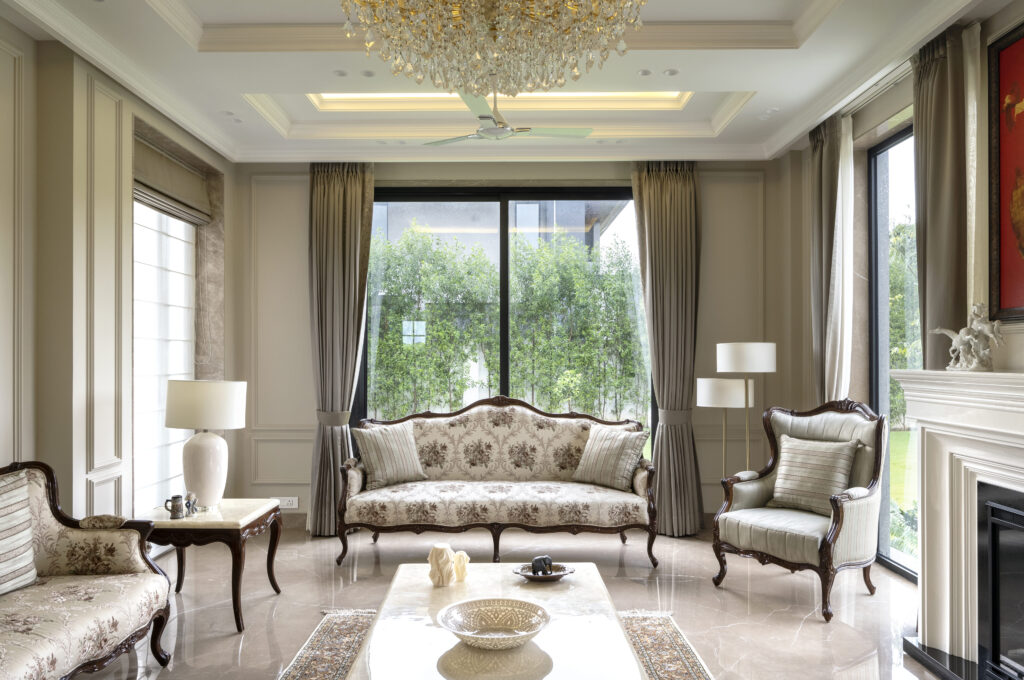
The ranges
These are all-in interior execution costs — joinery, flooring, false ceiling, electrical, painting, bathrooms, kitchen — for a residential project in Delhi NCR. They exclude loose furniture and the design fee, both covered below.
- Entry level — basic fit-out. Laminate joinery, vitrified tile, standard sanitaryware, minimal false ceiling. Functional and clean, nothing bespoke.
- Mid to upper — better hardware, some veneer, engineered timber in bedrooms, decent lighting design, branded sanitaryware.
- Luxury residential — imported or selected Indian stone, PU and veneer joinery with premium hardware, layered lighting, custom detailing throughout.
- High specification — imported marble, bespoke metalwork, home automation, specialist finishes, furniture designed for the space.
The bands overlap deliberately. Two projects quoted at the same rate can be very different jobs, and where a particular home lands depends entirely on its plan, its specification and how much of the work is genuinely in scope. Treat these as orientation, not as pricing.
What actually moves the number
Joinery, by a distance
Fitted joinery is typically 35 to 45 per cent of an interior budget — wardrobes, kitchen, TV units, vanities, storage. It is also where specification swings hardest. The same wardrobe in laminate on plywood versus PU-lacquered with premium runners can differ by a factor of three.
If your quote looks low, check the carcass material. Particle board instead of BWR plywood saves money today, and in Delhi humidity it tends not to last anything like as long.
Stone and flooring
Usually 15 to 20 per cent. Indian marble and good vitrified tile sit in a similar range; imported Italian marble can multiply the line several times over. The laying and finishing labour is a significant part of it too — large-format slabs with tight joints cost more to lay than 600 mm tiles.
Bathrooms and kitchen
The two most expensive rooms per square foot in any house, by some margin. A home with four bathrooms and a large kitchen will land higher per square foot than one with two bathrooms and the same total area — which is why comparing two projects on the headline rate alone is misleading.
Ceilings, electrical and lighting
Roughly 12 to 18 per cent combined. Layered lighting with dimming costs meaningfully more than a grid of downlights on one switch, and it is one of the few upgrades that changes how a home feels every single evening.
What sits outside the per-square-foot number
This is where most budget shocks come from. Ask any firm to confirm in writing which of these are in or out:
- Design fee — usually separate. Either a percentage of project cost (the percentage varies widely by firm, scope and project size), a rate per square foot, or a fixed fee
- Loose furniture — sofas, beds, dining tables, chairs. Rarely included, and easily 15 to 25 per cent of a total home budget
- Soft furnishings — curtains, upholstery, rugs. Curtains alone in a large home can run into several lakhs
- Appliances — hob, chimney, oven, refrigerator, washing machine
- Air conditioning — especially ducted systems, which are a major line
- Civil work — demolition, new walls, plumbing changes, waterproofing
- Art, plants and accessories — the layer that makes a home feel finished
- GST — confirm whether quoted figures include it
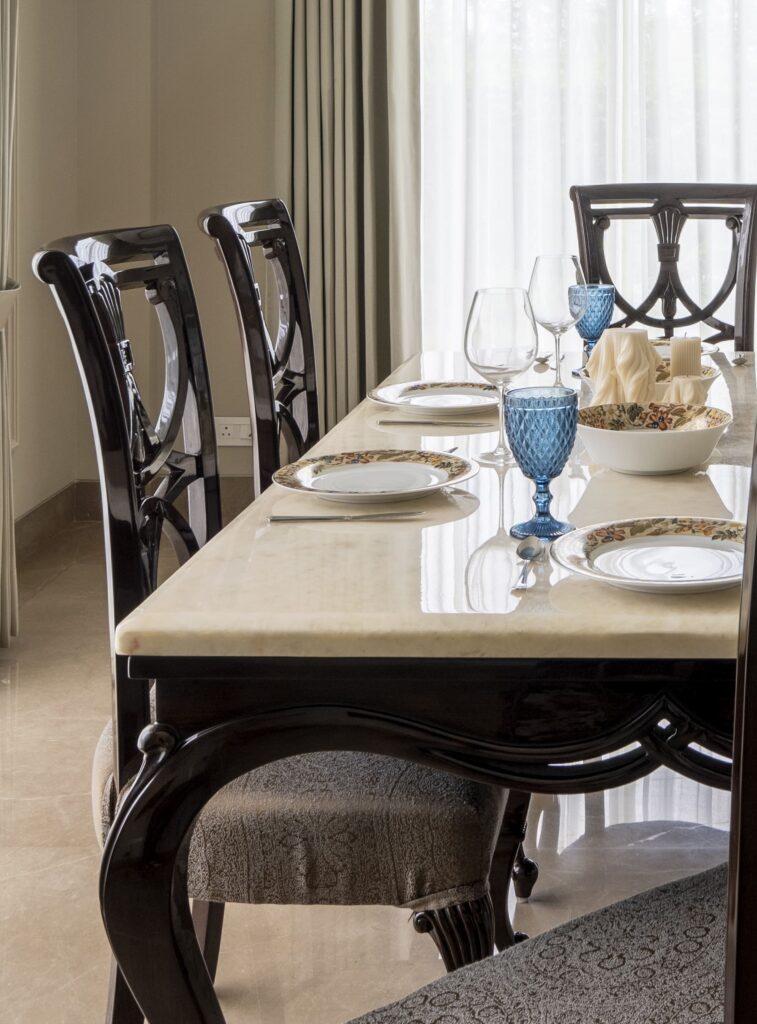
Rough totals by home size
Totals scale with three things at once — floor area, how many kitchens and bathrooms the plan carries, and specification. That is why two homes of the same size can sit a long way apart:
- 2 BHK, around 1,200 sq ft — least area and fewest wet rooms, so the lowest total at any given specification
- 3 BHK, around 1,800 sq ft — the most common brief in NCR, and usually three wet rooms rather than two
- 4 BHK, around 2,800 sq ft — more joinery and another bathroom or two, which moves the total faster than the extra area alone suggests
- Villa or farmhouse, around 6,000 sq ft — a different order of project, with site development and landscape on top of the house itself
Add roughly 20 per cent for furniture and furnishings, and the design fee on top. These are planning figures, not quotations — the only number that means anything is one drawn against your actual plan and specification.
Why quotes differ so much
Two quotes for the same flat can differ by 60 per cent and both be honest. The usual reasons:
Different scope. One includes civil work and electrical; the other assumes you handle it.
Different specification. “Modular wardrobe” covers an enormous range.
Different measurement. Carpet area, built-up and super built-up differ by 20 to 30 per cent. A rate quoted on super built-up looks cheaper for the same money.
Allowances instead of selections. A quote carrying a low stone allowance will rise the moment you choose stone you actually like.
How to compare quotes properly
Insist on a line-item breakdown against the same area basis, with named brands and materials rather than categories, and a written list of exclusions. Then compare the exclusions first, not the totals. The cheapest quote is usually the one that has left the most out.
We give clients a scope and a fee before any drawings begin, so the shape of the budget is agreed early rather than discovered late. If you would like a realistic figure for your own home, tell us about the project. You can also read our broader cost breakdown or see what each of our services covers.
About Pochē Aesthetics
Pochē Aesthetics is a luxury residential architecture and interior design practice based in Greater Kailash, New Delhi, founded by architect Niyati Satsangi. We design private homes — farmhouses, villas and apartments — across Delhi NCR and India, handling architecture, interiors, materials, lighting and styling as one connected commission. More about the practice.
Pingback: Home Renovation in Delhi NCR | Costs, Sequence & Surprises
Pingback: Apartment Interior Design in Delhi | 3 & 4 BHK Guide
Pingback: Interior Design in Gurgaon | Luxury Residential Practice
Pingback: Modular vs Carpenter vs Bespoke Joinery | How to Choose
Pingback: Interior Design in Noida | Luxury Residential Architects
Pingback: How to Read an Interior Design Quotation | Full Guide