Displaying art at home well is mostly a planning question. The right wall, the right height, the right light and enough empty space around the work matter more than the frame, and far more than matching the sofa.
If you own art you care about, or intend to collect, the home should be designed with it in mind from the first drawing. Here is how.
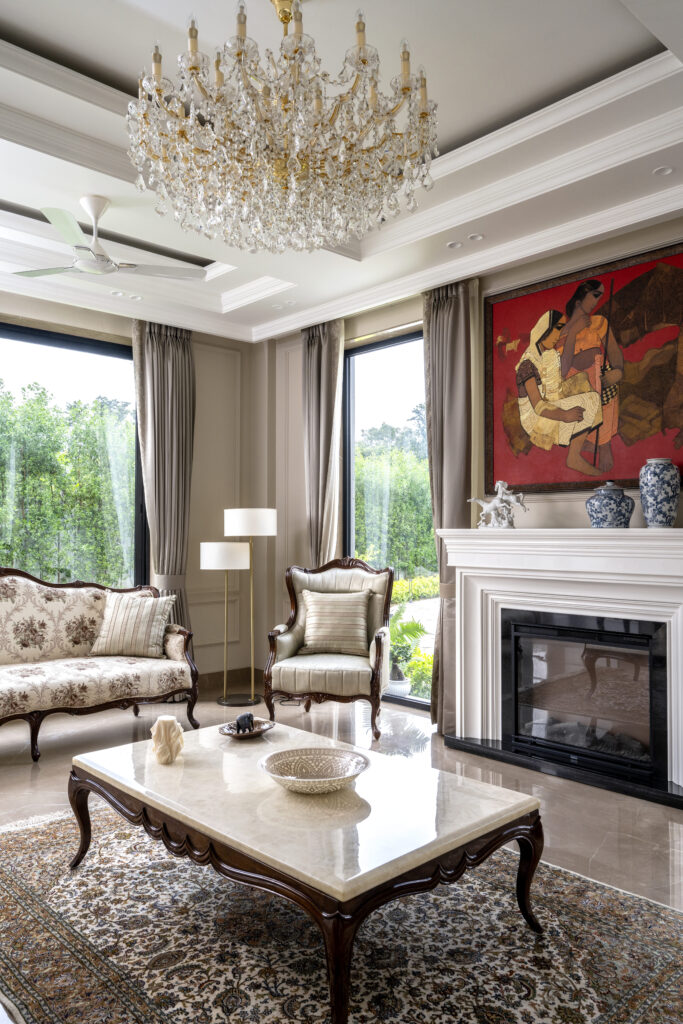
Start with the collection, not the walls
Before the layout is fixed, make a list of what you own: each work, its size, its medium and how much it matters to you. Photograph everything. A designer can then give the important pieces their places in the plan, with walls sized for them, instead of fitting them into whatever space is left at the end.
If you are still collecting, plan for growth. Leave some generous walls empty on purpose.
Displaying art at home: where it should go
Give major works their own wall
A strong painting wants a calm wall with nothing competing: no switches, no air-conditioning grille, no thermostat, no television beside it. Decide these walls early so that the electrician and the air-conditioning contractor keep them clean.
Use the points where people pause
The end of a corridor, the wall facing the front door, the stair landing, the wall behind a dining table. These are places where the eye rests, and art placed there is seen properly.
Mind the distance
A large canvas needs room to stand back from. A small drawing needs to be approached. Put big works where there is depth and intimate works in passages, studies and bedrooms.
Avoid the hostile places
- Walls that take direct sunlight.
- Above a working fireplace or a radiator.
- Bathrooms and kitchens, for anything valuable or on paper.
- Directly under an air-conditioning outlet.
- External walls with any history of damp.
Hanging height and spacing
- Centre at eye level. The middle of the work should sit roughly 145 to 150 centimetres from the floor. Most art in homes is hung too high.
- Relate it to furniture. Above a sofa or console, leave a hand’s width or a little more between the furniture and the frame, so the two read together.
- Size it to the wall. Over a sofa, a work or group about two-thirds the width of the sofa looks settled.
- Group with a rule. For several works together, keep the gaps equal and line up either the centres or one edge. Lay the arrangement out on the floor first.
- Leave space. Empty wall around a work is what gives it presence.
Lighting art properly
Light is what separates a home with art in it from a home designed around art.
- Plan it with the ceiling. Adjustable spotlights or wall-washers need to be positioned for each work before the ceiling is built. Adding them later means cutting the ceiling open.
- Aim from an angle. Light striking the work at about thirty degrees from the vertical avoids glare on glass and the viewer’s own shadow.
- Choose good colour rendering. Use lamps with high colour accuracy, so reds and skin tones look as the artist intended, and keep one warm colour temperature through the room.
- Use LED, on a dimmer. LEDs give off little heat and no ultraviolet to speak of. A dimmer lets the art glow in the evening without lighting the whole room.
- Keep flexibility. A track or adjustable fittings let you rehang as the collection changes.
- Light sculpture from more than one side, so it keeps its form.
Protecting what you own
- Sunlight. Daylight fades pigments and paper. Use window films or glass that filters ultraviolet, sheer curtains, and keep works on paper, textiles and photographs away from bright windows.
- Humidity. Delhi swings from very dry to very damp. Steady air conditioning and, for serious collections, humidity control keep canvases and frames stable. Avoid walls near bathrooms.
- Glazing. Works on paper should be framed with conservation mounts and ultraviolet-filtering, low-reflection glass.
- Fixings. Heavy works need fixings into masonry or reinforced backing, planned before the wall is finished. Tell your designer the weight.
- Security and insurance. Valuable works should be documented, insured and, where sensible, covered by the home’s security system.
Designing the room around the art
- Quiet backgrounds. Plain walls in off-white, warm grey or a deep neutral let colour in the work speak. Heavily veined stone or patterned wallpaper behind a painting fights it.
- Restraint in materials. The fewer finishes in the room, the more the art carries.
- Take cues, do not match. A cushion can pick up one colour from a painting. A room colour-matched to a canvas reduces the painting to decoration.
- Furniture below eye level near important walls, so nothing cuts across the work.
- Plinths and niches for sculpture, drawn into the plan and lit.
A gallery wall or corridor
A long passage is often the best gallery in the house. Give it a plain wall, a picture rail or track lighting, and enough width to stand back. For family photographs and smaller works, a single grouped wall in a family area works better than scattering them across every room.
Sculpture and large pieces
Heavy sculpture has to be planned with the structure. Check the floor can carry the load, plan the route in through doors and lifts, and decide the position before the flooring is laid. Outdoor sculpture needs a base, drainage and lighting designed with the landscape.
Frequently asked questions
What is the right height for displaying art at home?
Hang it so the centre of the work is about 145 to 150 centimetres from the floor, which is average eye level. Above furniture, leave a hand’s width or a little more between the two.
How should I light a painting?
With an adjustable LED spotlight or wall-washer of high colour accuracy, aimed at roughly thirty degrees, on a dimmer. Plan the positions before the ceiling is built.
Does sunlight damage art?
Yes. Daylight fades pigments, paper, textiles and photographs. Keep valuable works out of direct sun and use ultraviolet-filtering glass and curtains.
Should art match the room?
No. Choose art because you want to live with it, then keep the room calm enough for it to be seen. Matching reduces the work to an accessory.
When should I tell my designer about my art?
At the very start. The walls, the lighting and the fixings for important pieces should be part of the first plan.
How we work
Pochē Aesthetics — also written Poche Aesthetics — is a luxury residential architecture and interior design practice in New Delhi, founded and led by architect Niyati Satsangi. We ask what you own and love at the first meeting, and draw it into the plan and the lighting from the beginning.
If you are designing a home around a collection, tell us about it. See also lighting design for luxury homes, entrance and foyer design, and how to write a design brief.
About Pochē Aesthetics
Pochē Aesthetics — also written Poche Aesthetics — is a luxury residential architecture and interior design practice based in Greater Kailash, New Delhi, founded and led by architect Niyati Satsangi. Over more than twelve years the practice has designed private homes — farmhouses, villas, builder floors and apartments — across Delhi NCR and India, handling architecture, interiors, materials, lighting and styling as one connected commission, alongside select restaurant and commercial work. More about the practice.