Building a house from the ground up is the only project where you control everything — the plan, the light, the structure, the way rooms meet the garden. It is also the project with the most places for a budget to quietly expand.
Here is how villa construction cost in India actually breaks down, what sits outside the headline rate, and where the money genuinely earns its keep.
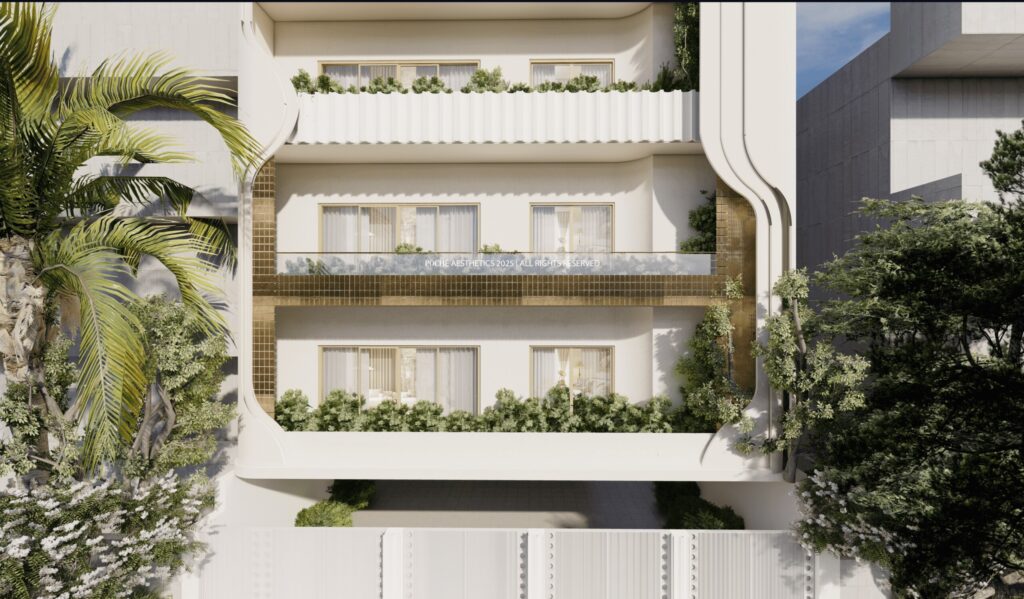
The construction bands
For structure, envelope and basic finishes — a house that is complete and occupiable, but with interiors still to come:
- Standard construction — simple structure, conventional spans, basic finishes
- Good quality — some architectural ambition, better envelope, decent services
- Architect-designed — longer spans, large glazing, stone cladding, considered detailing
- High specification — complex structure, imported systems, full automation
Interiors then sit on top as a second budget of comparable scale. A villa is effectively two budgets that have to be planned as one.
What moves the construction rate most
Spans and structure
Every metre of clear span costs money. A 6-metre living room span is substantially more expensive than a 3.5-metre one; cantilevers and column-free corners more again. Large houses want big rooms, and big rooms are a structural decision before they are a design one.
Glazing
Large openings are usually what people want most and budget for least. Bigger glass means heavier framing, and in the Indian climate it means better glass — double glazing or solar-control coating on west and south-west elevations. Skimping here produces rooms that are beautiful in photographs and unusable in May.
Basements and excavation
A basement is among the most expensive square footage in any house — excavation, shoring, waterproofing, drainage, ventilation and often mechanical extraction. Worth it for parking and services; rarely worth it for habitable rooms unless the plot forces it.
Cladding and finishes on the envelope
Stone cladding, exposed concrete done properly, or a well-detailed render all cost more than plaster and paint — and all age very differently. This is worth spending on, because the exterior is the one thing you will never economically redo.
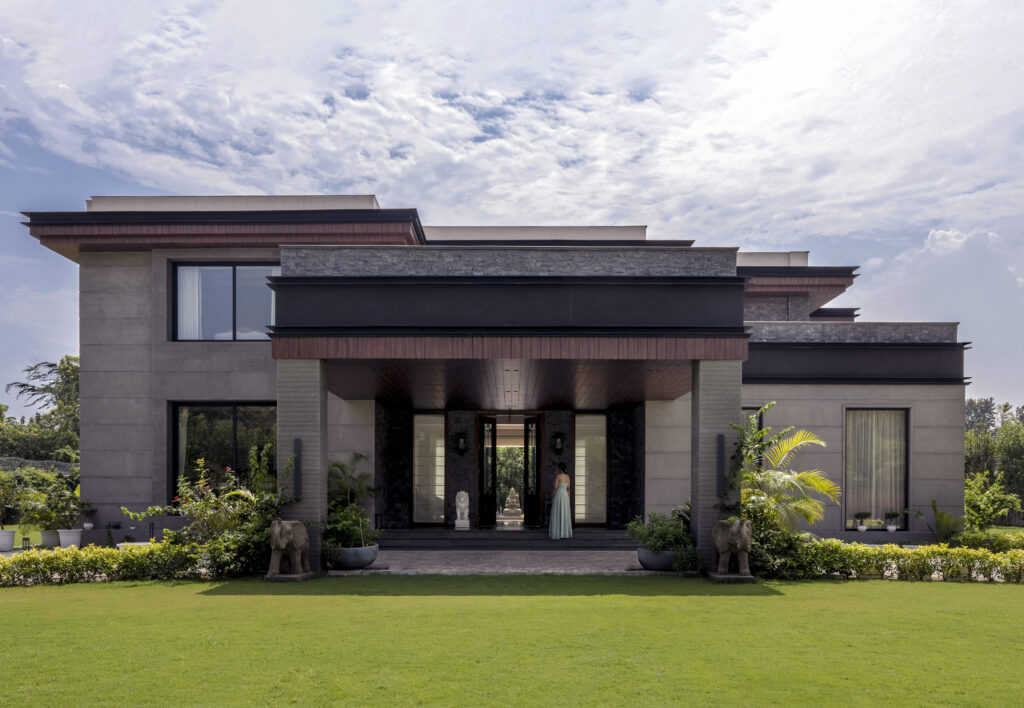
The costs outside the per-square-foot rate
On a plot with no existing infrastructure, these are not extras — they are core scope, and they are where most villa budgets are lost:
- Boundary wall and gate — hundreds of running metres on a large plot, and the cost scales with height and material
- Approach, driveway and parking
- Water — borewell, underground and overhead storage, pump room, softening and RO where the source water requires it
- Power — connection, transformer if needed, generator with acoustic enclosure, and the cabling to reach the house
- Sewage — septic system or a small treatment plant where there is no municipal line
- Landscape and irrigation — grading, soil, planting, lighting and a watering system
- Staff quarters, guard room and utility — built area that never appears in the “house” figure
- Approvals and professional fees
- GST
On a genuinely raw site, this package can reach a substantial fraction of the construction cost — sometimes a third or more. Budget for it at the start rather than discovering it in year two.
Where the money is genuinely worth spending
Structure and envelope. Permanent. Everything else is replaceable.
Waterproofing and drainage. Unglamorous and non-negotiable. Water finds every shortcut eventually, and on a villa the consequences are expensive.
Glazing quality. Governs comfort and running cost for decades.
Services planning. Where the AC units sit, where the generator goes, how the pump room is ventilated. Designed in, these disappear. Added later, they sit in the garden for the life of the house.
Landscape. On a plot, the garden is half of what you are buying. It is consistently the most under-budgeted line and the most visible.
Where to restrain
Total area. The single most effective saving available. A well-planned 5,000 sq ft house lives better than a loose 7,000 sq ft one, and costs a great deal less to build, cool, light, clean and staff. Area is the gift that keeps on taking.
Imported stone everywhere. Superb in the right two or three places. Across every floor, it simply doubles a line without doubling the effect.
Automation beyond what you will use. Lighting scenes and climate, yes. Ten subsystems with three apps, rarely.
Timeline
Design and approvals typically run four to seven months. Construction for a house of this scale, fourteen to twenty months. Interiors add six to nine, partly overlapping. Landscape runs alongside and finishes last. Two to two and a half years from first meeting to moving in is a realistic expectation.
Monsoon reliably costs six to eight weeks of structural work a year. Plan around it rather than being surprised annually.
The argument for designing it as one commission
The most expensive pattern in villa projects is sequential — an architect designs the shell, it gets built, and an interior designer then works around fixed windows, set beam depths and services already run. Every decision afterwards becomes a workaround, and workarounds are not cheap.
Pochē Aesthetics takes villas and farmhouses as a single commission, architecture and interiors together, so the building and its finishes are resolved in the same conversation. If you are planning a house, tell us about the site. See also what actually matters in villa design, building on the Delhi farmhouse belt, and our work.
About Pochē Aesthetics
Pochē Aesthetics — also written Poche Aesthetics — is a luxury residential architecture and interior design practice based in Greater Kailash, New Delhi, founded and led by architect Niyati Satsangi. Over more than twelve years the practice has designed private homes — farmhouses, villas, builder floors and apartments — across Delhi NCR and India, handling architecture, interiors, materials, lighting and styling as one connected commission, alongside select restaurant and commercial work. More about the practice.