Many homeowners looking for a turnkey interior designer in Delhi want one simple thing: a single team that designs the home, builds it, and hands over the keys with everything finished. No juggling of carpenters, electricians, painters and suppliers. No daily calls to site. Just one point of responsibility.
Turnkey can deliver exactly that. It can also go badly wrong if the design is thin and the execution is rushed. This guide explains how turnkey interiors work in Delhi, what a good turnkey firm should provide, and the questions that separate a reliable one from the rest.
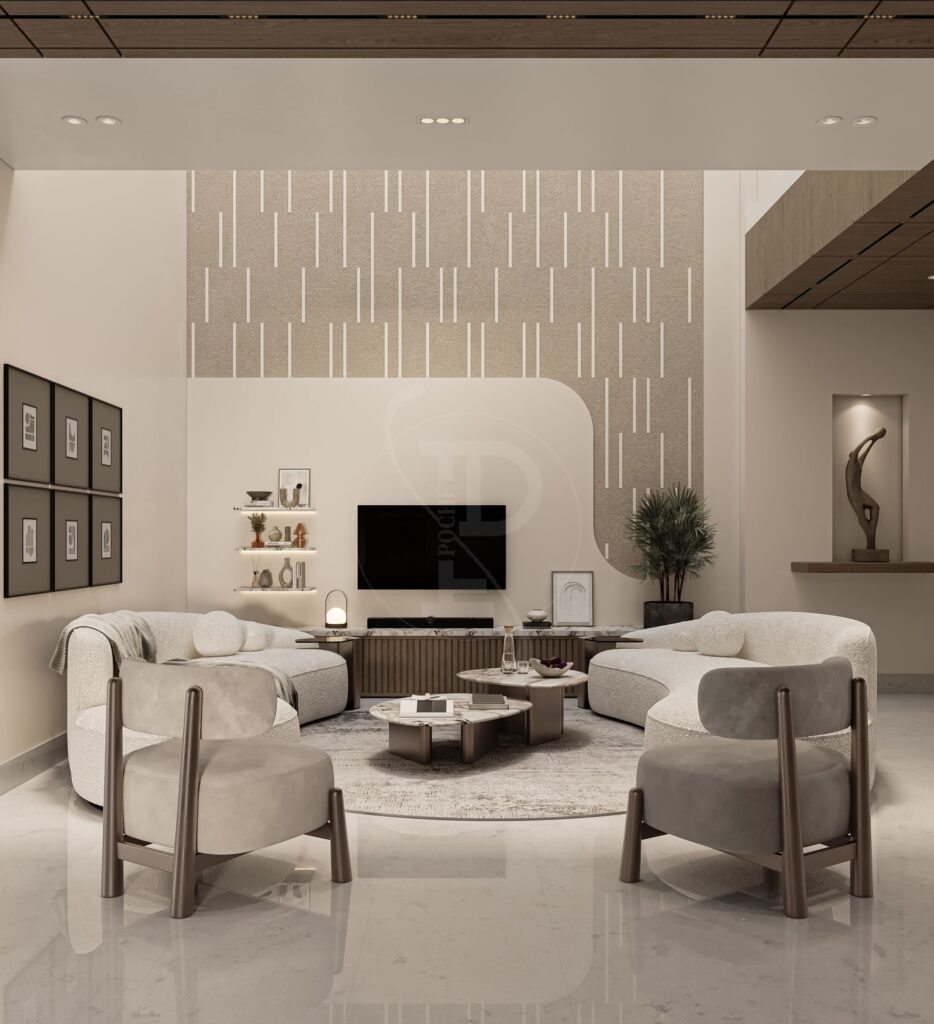
What turnkey interior design means
In a turnkey project, the same firm is responsible for both design and execution. It prepares the drawings, procures materials, appoints and manages the trades, supervises the work and hands over a finished home.
The alternative is a design-only appointment, where the designer produces drawings and supervises, while you appoint and pay contractors separately. Both approaches can work well. The difference is who carries the coordination and who is accountable when something goes wrong.
When turnkey makes sense
- You have limited time. Busy professionals and families who cannot visit site often.
- You live abroad or in another city. Turnkey removes the need to manage contractors from a distance.
- You want one point of accountability. If a joint fails or a finish is wrong, one firm fixes it.
- The project is complex. Many trades working in sequence, with bespoke joinery, stone, lighting and automation.
It may suit you less if you already have trusted contractors, or if you want to buy every material yourself and control each line of cost.
What a good turnkey interior designer delivers
A complete design before work starts
Turnkey should never mean designing on site. Insist on a full set of drawings and a written specification before execution begins: layouts, ceilings, lighting, electrical, plumbing, flooring, joinery and finishes. This is what you will measure the finished home against.
A clear, itemised scope and price
The proposal should list what is included room by room, with materials and brands specified. Vague lines such as “premium finish” or “good quality laminate” leave room for substitution.
A written programme
A sequence of works with milestones lets you see progress and spot delays early, rather than discovering them near the end.
Quality control on site
Ask how work is inspected. Who checks waterproofing before tiling? Who checks wiring before the ceiling closes? Hidden work is where problems start.
A proper handover
At completion you should receive final drawings, a list of materials and suppliers, paint codes, warranties and operating guides for equipment. You should also agree a defect liability period in writing.
A turnkey project, stage by stage
- Brief and site survey. Measurements, existing services and a written list of what each room needs.
- Design. Layouts, mood and materials, then detailed drawings and a specification.
- Itemised proposal. A priced scope that matches the drawings line by line.
- Civil and services. Demolition, masonry, plumbing, electrical and air conditioning, inspected before anything is closed.
- Ceilings, flooring and joinery. Installed in sequence, with samples approved before production.
- Finishes and fittings. Paint, polish, lighting, sanitaryware and hardware.
- Styling and handover. Furniture, soft furnishings and art placed, snags closed, and the handover file delivered.
Questions to ask before you sign
- Who designs the project, and who manages it on site? Are they the same team?
- Will I receive the full drawing set and specification before work starts?
- Which brands and materials are specified, and can I see samples?
- How are changes priced and approved?
- How are payments linked to completed work?
- What is excluded? Loose furniture, appliances, air conditioning units, curtains and taxes are common exclusions.
- What happens if something fails after handover?
- Can I visit a finished turnkey home and speak to that client?
Common pitfalls in turnkey interiors
- Design treated as a free add-on. When design is “included” with execution, it is sometimes minimal. Ask to see the drawings.
- Material swaps. Without a specification naming brands and grades, cheaper equivalents can appear on site.
- Payments ahead of progress. Large advances with little tied to completed work leave you with less leverage.
- Rushed timelines. Paint, polish and stone need time to cure. A promise that ignores this usually shows in the finish.
Turnkey or design-and-supervise?
Turnkey gives you simplicity and a single point of accountability. Design-and-supervise gives you more control over costs and contractors, with the designer acting as your representative on site. Some practices offer both and recommend one depending on the project.
Whichever route you choose, the quality of the design and drawings decides how the home turns out. Execution can only be as good as what it is asked to build.
Frequently asked questions
What is a turnkey interior designer?
A firm that both designs and executes your interiors, managing materials, trades and supervision, and hands over a finished home.
Is turnkey interior design more expensive?
Not necessarily. You pay for coordination and accountability, but you avoid the cost of mistakes between separate contractors. Compare itemised proposals rather than totals.
Can I choose my own materials in a turnkey project?
Usually yes. A good firm will specify materials with you and show samples. Make sure the final choices are written into the specification.
Who is responsible for defects after handover?
In a turnkey project, the firm is responsible during the agreed defect liability period. Agree its length and coverage in writing.
Is turnkey suitable for NRI homeowners?
Very often, because a single team manages the project and reports progress, so the owner does not have to coordinate trades from abroad.
How we work
Pochē Aesthetics is a luxury residential practice in New Delhi, led by architect Niyati Satsangi. We resolve every home in drawings and a written specification before work begins, then manage and supervise execution so one team remains accountable from the first sketch to the final styling.
To talk about your home, get in touch. Further reading: what turnkey interior design is, interior designer vs contractor vs turnkey and managing a home project from abroad.
About Pochē Aesthetics
Pochē Aesthetics (also written Poche Aesthetics) is a luxury residential architecture and interior design practice based in Greater Kailash, New Delhi, founded and led by architect Niyati Satsangi. The practice designs private homes across Delhi NCR and India, including farmhouses, villas, bungalows, builder floors and apartments, and handles architecture, interiors, materials, lighting and styling as one connected commission. More about the practice.