For anything beyond a cosmetic refresh, move out. That is the honest answer, and it is the one most clients do not want. Dust from demolition and stone cutting reaches every room regardless of sheeting, water and power go off unpredictably, and work slows by a third or more when trades have to pack up and vacate each evening.
If moving out genuinely is not possible, it can be done. Here is how to renovate while living in the house without it ruining a year of your life.

First, be honest about which kind of work it is
Cosmetic refresh — paint, some new joinery, lighting changes, furniture. No civil work, no services touched. Entirely liveable, six to ten weeks, and most households manage it without much disruption.
Partial renovation — kitchen and bathrooms redone, flooring replaced, new joinery, electrical upgraded. Liveable with difficulty, and only if phased properly.
Full strip-back — everything out to the shell, new layout, new services. Not liveable. Attempting it will cost you more in time than renting somewhere would cost in money, and the quality will suffer.
The decision usually turns on whether the kitchen and at least one bathroom can stay functional throughout. If they cannot, staying is not realistic.
Phase it properly
The strategy is to complete one zone entirely, seal it, move into it, and then start the next. Not to work everywhere at once more slowly.
A typical sequence for a flat:
- Bedrooms and their bathrooms first — complete, sealed, and occupied
- Then the living and dining spaces, while the family lives in the finished bedrooms
- Kitchen last, because it is the hardest to live without and benefits from the rest being done
This takes longer overall than an empty-house programme. It is the trade you are making.
Critically: finish each phase, including snagging and cleaning, before the next starts. A half-finished zone that you move into “for now” tends to stay half-finished, because getting trades back into an occupied room is harder than keeping them there.
Dust is the real problem
Not noise, not inconvenience — dust. Demolition and stone cutting produce fine particulate that travels everywhere, and in Delhi you are adding it to a baseline that is already poor.
What actually helps:
- Proper dust partitions, not plastic sheets taped to a doorframe. Framed and sealed partitions with a zipped access panel, floor to ceiling
- Seal every penetration between zones — gaps around pipes, the gap under doors, AC sleeve openings, and crucially the ceiling void, which is the route people forget
- Cover and seal AC grilles and ducts in the working zone, or dust will be distributed through the system
- Cut outside where possible. Insist that stone and tile cutting happens outside the flat, or wet-cut with extraction
- A dedicated debris route that does not cross living areas, agreed with the society
- Daily clean-down, written into the contract rather than requested each evening
- Air purifiers in the occupied zone, running continuously, with filters you expect to replace early
Keeping the basics running
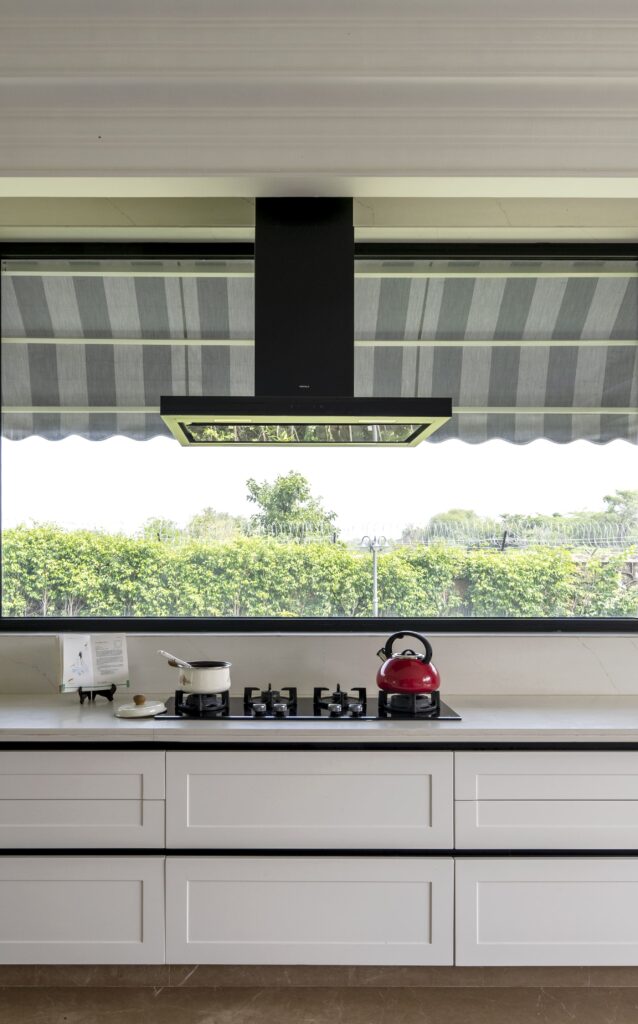
A temporary kitchen. Before the real one comes out, set up an induction plate, a microwave, a kettle, the refrigerator and a washing-up arrangement somewhere with power and a drain — often the utility or a bathroom. Do this properly rather than improvising, because you will live with it for weeks.
One bathroom protected throughout. Non-negotiable. Agree which one and have it excluded from the works programme entirely.
Water and power interruptions. Ask the contractor for notice the day before, in writing, and keep stored water. Unannounced outages are the single most common complaint from clients living through work.
Laundry. Either keep the machine connected in a protected zone or plan to send it out. It is easy to forget until there is nowhere to wash anything.
Protecting what stays
Furniture, art and anything you are keeping should be moved out entirely if you can afford storage, and otherwise consolidated into one sealed room, wrapped properly rather than draped with a sheet.
Photograph everything before work starts, including existing damage. It makes any later conversation about who broke what short and factual.
Keep valuables, documents and jewellery off site. This is not about distrust — a site has many people passing through and no good way to secure anything.
Agree the rules in writing, before anyone starts
- Working hours, and which days
- Which bathroom and which rooms are off limits
- Where workers eat, rest and use a toilet — settle this explicitly
- Whether they have a key, or whether someone must be home
- Daily clean-down and end-of-week deep clean
- Notice period for water and power interruptions
- Debris route and removal frequency
- A single point of contact on each side
These conversations are easy before work starts and difficult in week six.
Managing the household
Plan to be away for the worst of it if you can — demolition and the first fix are the dustiest and loudest phases, and a week elsewhere at that point is worth more than a week elsewhere later.
If there are young children, elderly parents, or anyone with a respiratory condition in the house, weigh this seriously. Delhi construction dust plus Delhi winter air is a genuine health consideration, not an inconvenience.
And accept that the programme will be longer. Budget a realistic contingency of time as well as money, because living on site slows everything.
Frequently asked questions
Can you live in a house during a full renovation?
Not comfortably, and we would advise against it. A full strip-back removes the kitchen, the bathrooms and the services simultaneously. If the work is partial and phased by zone, with one bathroom and a temporary kitchen protected throughout, it is manageable.
How much longer does a renovation take if you live in it?
Expect it to run meaningfully longer — commonly a third again or more. Trades lose time setting up and packing down each day, fewer can work simultaneously, and each phase has to be finished and cleaned before the next begins.
How do you keep construction dust out of living areas?
Framed, sealed floor-to-ceiling dust partitions with a zipped access panel, not taped plastic sheeting. Seal gaps around pipes, under doors, at AC sleeves and through the ceiling void. Cover AC grilles. Insist stone and tile cutting happens outside the flat or is wet-cut with extraction. Run air purifiers continuously in the occupied zone.
Which room should be renovated last?
The kitchen, in most cases. It is the hardest room to live without, and doing it last means the rest of the home is finished and clean before you lose it. Make sure a workable temporary kitchen is set up before it comes out.
Should I renovate in a particular season in Delhi?
Avoid having the dustiest phases coincide with winter if anyone in the household has respiratory sensitivity, since outdoor air quality is already poor then. Monsoon slows polish, paint and stone laying because of humidity. Spring and autumn are the easiest windows for work you are living through.
Getting it right
Where a client has to stay in the home, we plan the programme around that from the start — zone phasing, dust containment, the temporary kitchen and the protected bathroom written into the scope rather than improvised on site. It is a different programme from an empty-house renovation, and it has to be designed as one.
If you are planning work on a home you cannot move out of, tell us about it. See also what a renovation really involves, how long a project takes, and choosing a contractor.
About Pochē Aesthetics
Pochē Aesthetics — also written Poche Aesthetics — is a luxury residential architecture and interior design practice based in Greater Kailash, New Delhi, founded and led by architect Niyati Satsangi. Over more than twelve years the practice has designed private homes — farmhouses, villas, builder floors and apartments — across Delhi NCR and India, handling architecture, interiors, materials, lighting and styling as one connected commission, alongside select restaurant and commercial work. More about the practice.