People use “interior decorator” and “interior designer” as though they mean the same thing, and firms rarely correct them because the fee is attached to whichever word the client used. They are genuinely different jobs, and hiring the wrong one is the most common reason a project disappoints.
Here is the honest difference between an interior decorator and an interior designer — and which one your project actually needs.
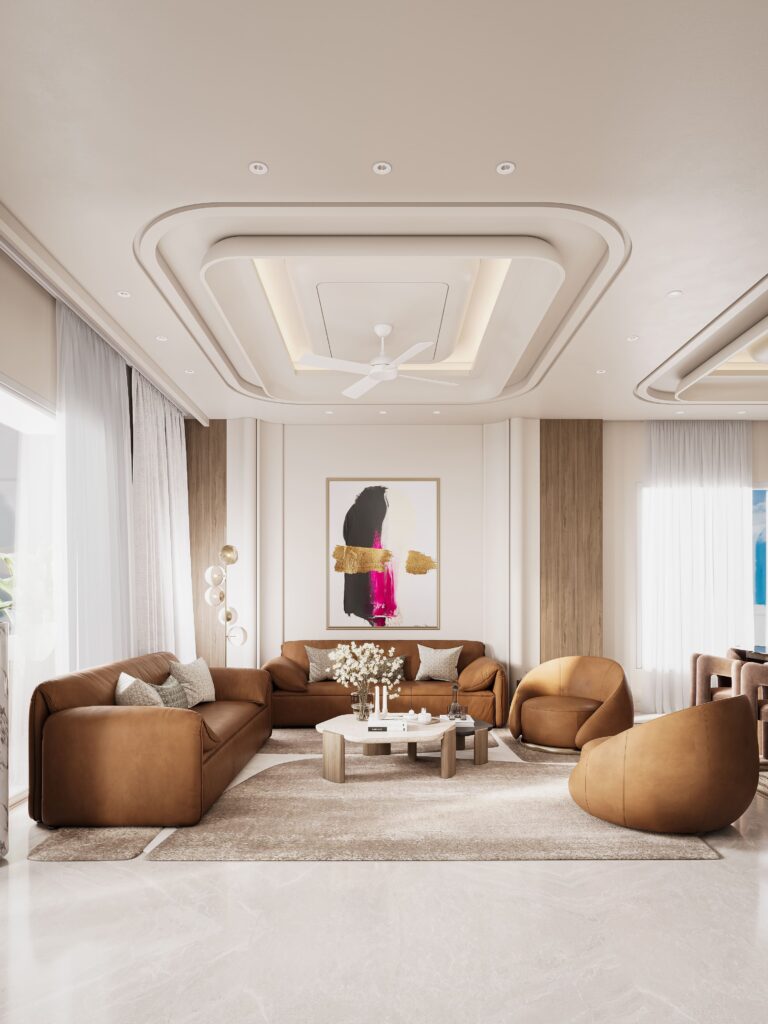
The short version
An interior decorator works with the surfaces and contents of a room that already exists — colour, furniture, fabric, art, accessories, lighting fixtures. Nothing structural, nothing that requires drawings a contractor builds from.
An interior designer works with the space itself — how rooms are arranged, where walls and openings go, ceiling levels, services, joinery, materials and setting-out — and produces a drawing set that someone builds from.
An architect extends that to the building: structure, envelope, approvals, and anything ground-up.
The simplest test: if what you need involves moving a wall, changing a plan, replacing bathrooms or rewiring, you need a designer or an architect. If the layout is fine and the house simply looks tired, a decorator may be exactly right.
What a decorator actually does
- Colour and paint schemes
- Furniture selection and arrangement
- Fabric, upholstery, curtains and rugs
- Art, mirrors, accessories, plants
- Decorative light fittings
- Styling and finishing
Good decorators are genuinely skilled, and the layer they handle is the one that makes a home feel finished rather than delivered. Plenty of beautiful homes are the work of a decorator on top of a plan that was already sound.
What a designer does in addition
- Space planning — which room goes where and how circulation works
- Non-structural walls, openings and partitions
- Reflected ceiling plans and levels
- Electrical and lighting layouts, including switching
- Plumbing positions and heights
- Joinery drawings with internal sections and hardware schedules
- Flooring and tile setting-out
- Material specification by brand and product
- Coordination with contractors and site supervision
The distinction is not taste. It is whether anyone has drawn the hundred decisions a contractor would otherwise make on your behalf — switch heights, where a stone joint lands, how a wardrobe shutter splits, where the duct and the beam collide.
In India, the words are used loosely
Worth being clear-eyed about this. In India there is no protected title for “interior designer” or “interior decorator” — anyone can use either. “Architect” is different: it is a regulated title under the Council of Architecture, and only registered architects may use it or submit drawings for sanction.
So the label on a firm’s website tells you very little. What tells you a great deal is the answer to one question: what drawings will I receive?
If the answer is three-dimensional views and a material board, you are buying decoration regardless of the word on the door. If it includes ceiling plans, electrical layouts with switching, joinery sections and a specification schedule, you are buying design.
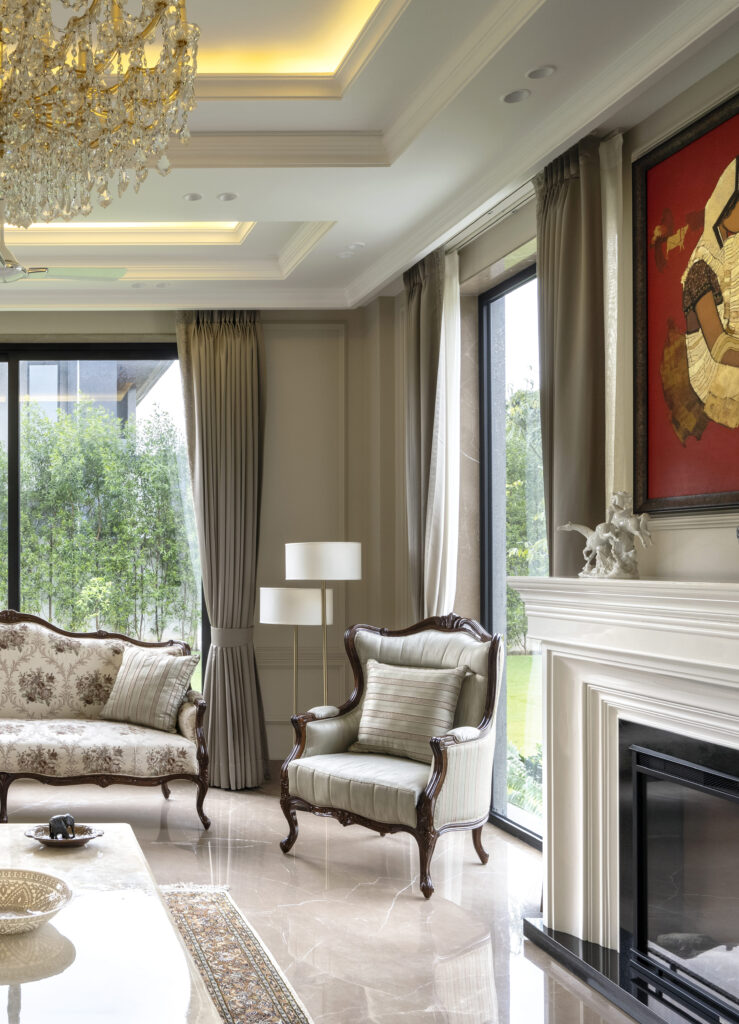
Which do you need?
A decorator is enough if: the layout works, the kitchen and bathrooms are sound, services are in good order, and the problem is that the house looks dated or unfinished. This is a real and common situation, and paying for a full design service would be waste.
You need a designer if: the plan does not suit how you live, the kitchen is in the wrong place or too small, bathrooms need redoing, the home is more than fifteen years old, or you are fitting out a new flat from bare shell.
You need an architect if: anything is structural, you are building from the ground up, the site is difficult, or drawings must be submitted for sanction.
The expensive middle ground
The pattern we see most often: a client hires decoration-level help for a project that needed design. The furniture is lovely, the fabrics are well chosen — and the kitchen is still awkward, the bedroom still has nowhere sensible for a wardrobe, and the lighting is still a grid of downlights on one switch.
Nothing was done badly. The wrong scope was bought. And because the finishes are new, fixing the underlying problems now means undoing work that is barely a year old.
The reverse happens too, less expensively: a full design service commissioned for a flat that only needed restyling.
Fees, briefly
Decoration is usually engaged as a smaller, shorter commission — a styling or furnishing scope rather than a full design appointment. Design costs more because it produces more and runs longer, and on a project of any complexity it generally pays for itself in avoided rework and better purchasing.
What matters more than the number is that the scope is written down. Ask any firm, whatever they call themselves, to set out in writing exactly what you receive and what is excluded.
How we work
Pochē Aesthetics — also written Poche Aesthetics — is an architecture and interior design practice in Greater Kailash, New Delhi, founded and led by architect Niyati Satsangi. We work at the design and architecture end: full drawing sets, specification, and site supervision, with styling handled as part of the same commission rather than as a separate appointment.
We will also tell you honestly if your project only needs the decoration layer. That is a cheaper engagement and sometimes the right one.
If you are unsure which you need, describe the project to us and we will say plainly. See also architect versus interior designer, what a drawing set contains, and the questions worth asking any firm.
About Pochē Aesthetics
Pochē Aesthetics — also written Poche Aesthetics — is a luxury residential architecture and interior design practice based in Greater Kailash, New Delhi, founded and led by architect Niyati Satsangi. Over more than twelve years the practice has designed private homes — farmhouses, villas, builder floors and apartments — across Delhi NCR and India, handling architecture, interiors, materials, lighting and styling as one connected commission, alongside select restaurant and commercial work. More about the practice.