In a Delhi home, sustainable design is mostly about not needing the air conditioning as much. Orientation, shading, glazing and insulation do more for both running cost and comfort than any solar panel bolted on afterwards — and unlike panels, they are decided once and cannot be retrofitted.
Here is what sustainable and energy-efficient home design actually means in India, in the order the decisions have to be made.
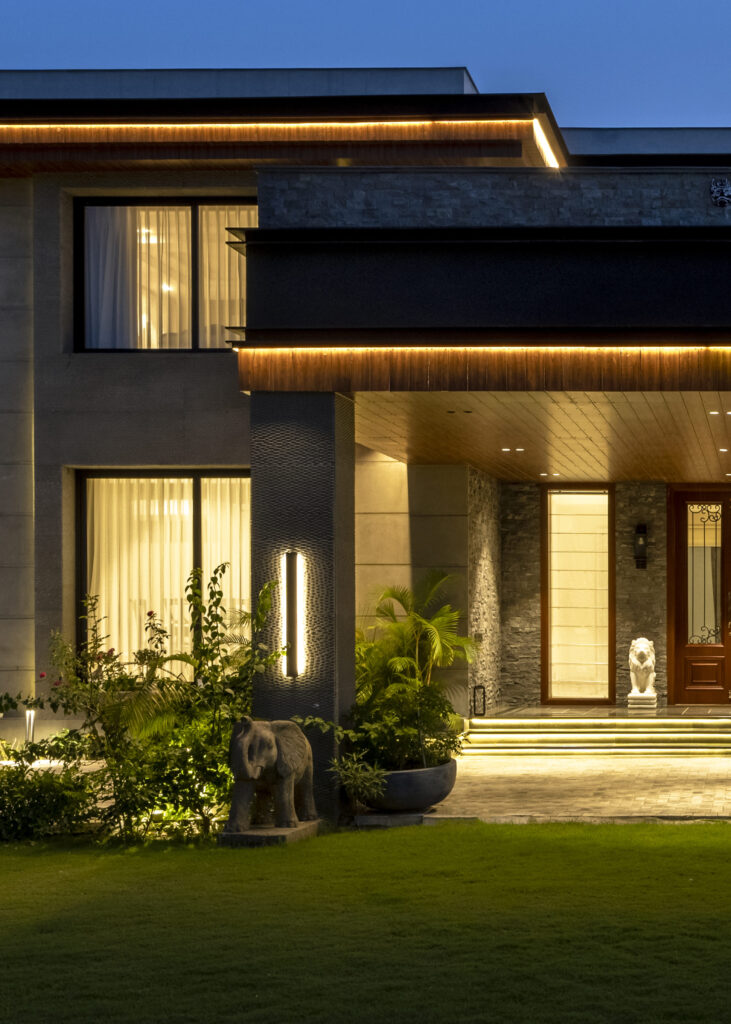
Start with the things you cannot change later
Orientation
The single largest determinant of a house’s energy use, and free if you are building from scratch.
East light is the most benign — bedrooms and breakfast spaces belong there. North light is even and suits studies. West is the problem: a west-facing living room with large glass gains serious heat from three in the afternoon through four months of the year, and no amount of cooling makes it comfortable cheaply.
On a plot you choose this. In an apartment you cannot, which makes the next item more important.
Shading, outside the glass
Shade only works when it is on the outside. Blinds behind the glass manage the light after the heat is already in the room.
What works: deep balconies and projecting slabs, external screens or jaali, a pergola with planting, and trees. A mature tree on a west elevation does more than most mechanical interventions, which is one reason existing trees are worth designing around rather than clearing.
Glazing
On west and south-west elevations, double glazing or a good solar-control glass pays for itself in comfort and running cost. The air gap matters as much as the glass. Frames matter too — uPVC or thermally broken aluminium with proper gaskets, because an uninsulated frame conducts heat straight through regardless of the glass.
This is also the upgrade that reduces noise and dust at the same time, which in Delhi makes it the most efficient money in the house.
Insulation and the roof
The roof takes the most sun of any surface. On a top-floor flat or an independent house, roof insulation or a reflective finish measurably reduces the cooling load. Terrace gardens and raised deck tiles both help by keeping direct sun off the slab.
Cavity or external wall insulation is uncommon in Indian construction and makes a real difference on exposed elevations.
Then the systems
Air conditioning sized correctly. Oversized units cycle on and off, which is inefficient and gives poor humidity control. Inverter units sized to the actual room load, with the outdoor unit in shade and with airflow, run considerably cheaper.
Ceiling fans alongside the AC. Moving air lets you run the thermostat a couple of degrees higher for the same comfort, and that is a substantial saving across a summer.
LED throughout, dimmable. Dimming reduces consumption as well as improving how rooms feel.
Solar water heating is well suited to Delhi’s climate and reliable sun. Often a better first investment than photovoltaics for a household, because water heating is a large and predictable load.
Rooftop solar, once the envelope is sorted. Generating power to run an inefficient house is the expensive way round; reducing demand first means a smaller, cheaper system does more.
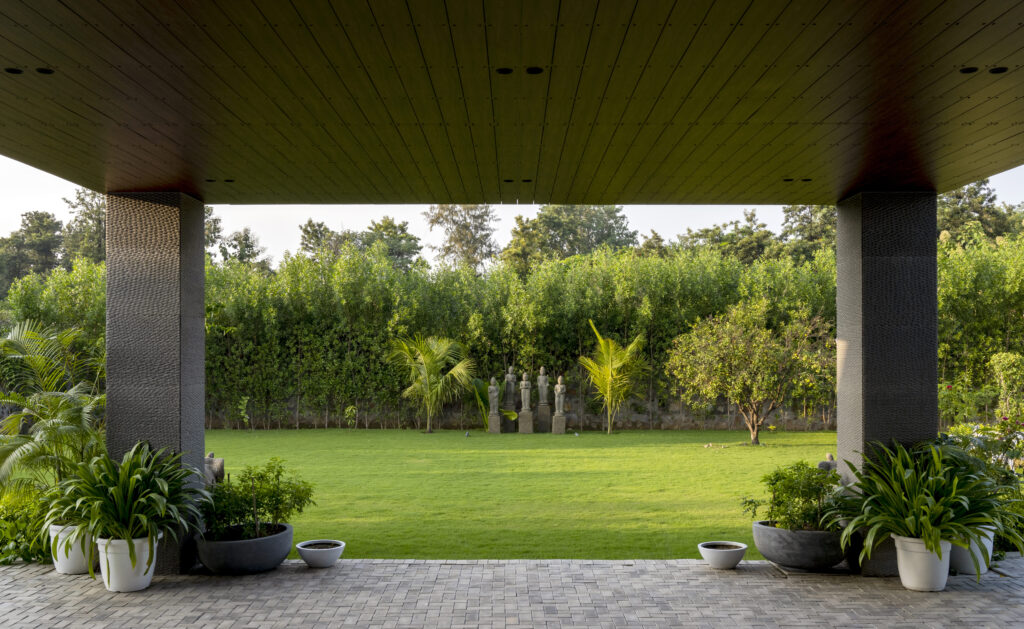
Water, which matters as much as energy here
Delhi’s water table has been falling for decades, and this is where a household can make a genuine difference.
- Rainwater harvesting — required on larger plots in Delhi, and worth doing beyond the minimum. A recharge pit returns water to the ground rather than to a storm drain
- Permeable surfaces — gravel, open-jointed paving and planted strips let rain soak in. Sealing an entire plot is a missed opportunity
- Greywater reuse for irrigation, where the plot is large enough to justify the plumbing
- Low-flow fittings — aerated taps and efficient showers, which reduce both water and the energy used to heat it
- Drip irrigation rather than sprinklers for beds
- Planting suited to the climate, grouped by water need. A smaller well-kept lawn framed by drought-tolerant planting uses a fraction of the water of a large one
Materials
Local stone over imported. Indian marble, granite, Kota and sandstone are excellent, and the transport footprint of imported stone is substantial.
Durability is sustainability. The greenest material is the one you do not replace. Engineered wood that lasts twenty years beats laminate replaced twice.
Low-VOC paints and adhesives, and better-grade board. This is an indoor air quality decision as much as an environmental one — a house full of new joinery off-gasses for weeks.
Reuse what is there. On a renovation, keeping sound structure, good timber or existing stone is both cheaper and lower-impact than stripping to shell by default.
What is mostly marketing
Worth saying plainly. Solar panels on a house with uninsulated glazing and an oversized AC system. “Eco-friendly” finishes with no certification behind the claim. Automation sold as energy saving when it mostly adds standby load. And imported “sustainable” materials shipped halfway around the world.
The unglamorous items — orientation, shade, glazing, correct equipment sizing — are where the actual savings are, and none of them photograph well.
Frequently asked questions
What is the most effective sustainable design decision for a Delhi home?
External shading on west and south-west elevations, combined with good glazing. Together they cut the cooling load more than any other single intervention, and both must be decided during design rather than added later.
Is rooftop solar worth it for a home in Delhi?
Generally yes, given the reliable sun, but it is the second step rather than the first. Reducing demand through shading, glazing and correctly sized equipment means a smaller system achieves more. Solar water heating is often the better starting point for a household because water heating is a large, predictable load.
Does double glazing make sense in India?
On hot elevations, yes. It reduces heat gain, noise and dust simultaneously. The frame matters as much as the glass — an uninsulated aluminium frame conducts heat regardless of what is glazed into it.
Can an apartment be made more energy efficient?
Yes, though you cannot change orientation. The levers are glazing and sealing, blinds and lined curtains on hot elevations, correctly sized inverter air conditioning with the outdoor unit shaded, ceiling fans, LED lighting on dimmers, and low-flow fittings. Facade changes usually need society permission.
Is rainwater harvesting mandatory in Delhi?
It is required for plots above a defined size under Delhi building regulations, and the threshold and specification have changed over time. Confirm the current requirement for your plot with your architect before designing, as it affects the layout of the services.
Getting it right
We treat orientation, shading, glazing and services sizing as design decisions taken at the start rather than as a sustainability package added at the end — because that is the order in which they actually work, and the earlier ones cannot be revisited.
If you are planning a home, tell us about it. See also designing for indoor air quality, materials that survive the Delhi climate, and landscape and water management.
About Pochē Aesthetics
Pochē Aesthetics — also written Poche Aesthetics — is a luxury residential architecture and interior design practice based in Greater Kailash, New Delhi, founded and led by architect Niyati Satsangi. Over more than twelve years the practice has designed private homes — farmhouses, villas, builder floors and apartments — across Delhi NCR and India, handling architecture, interiors, materials, lighting and styling as one connected commission, alongside select restaurant and commercial work. More about the practice.