Almost every home in Delhi NCR has outdoor space, and most of it goes unused. Too hot, too dusty, too exposed, nowhere to sit, nothing to sit on. The terrace becomes a place where the water tank lives and the balcony becomes a drying area.
Here is how to make a terrace or balcony genuinely usable in this climate — the four things it needs, what to build it from, and the mistakes that cause leaks.
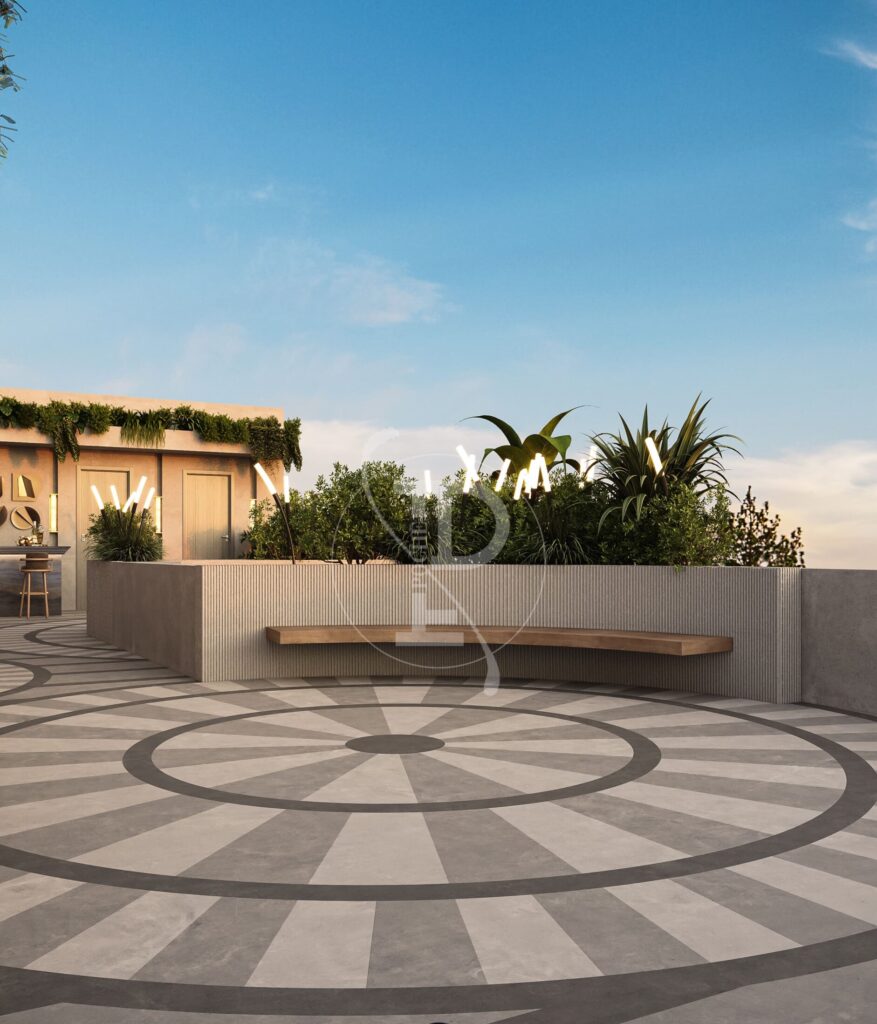
The four things that decide whether it gets used
Outdoor spaces that work all have these. Ones that fail are usually missing two or three.
Shade. Without it, the space is unusable for eight months of the year between about ten in the morning and five in the afternoon. A pergola, a deep overhang, a tensile canopy, a large tree, or a retractable awning — any of them, but something.
A floor you will walk on barefoot. Bare concrete or plain terrace tiles get too hot to stand on in May. This is the reason more terraces go unused than any other, and it is entirely solvable.
Somewhere comfortable to sit. One genuinely comfortable seat beats a set of four plastic chairs nobody uses. Built-in seating with outdoor cushions works well because it survives being left out.
Light and power. A terrace with no light is a daytime-only space, and Delhi evenings from October to March are the best time to be outside. A socket matters too — for a fan, a lamp, a speaker, a kettle.
Add water if you can — a tap for plants saves carrying buckets, and it determines whether the planting survives.
Flooring: what actually works here
Anti-skid outdoor-rated vitrified tile. The pragmatic answer. Dimensionally stable, waterproof, indifferent to humidity, available in stone-like finishes. Specify outdoor-rated and anti-skid, not an indoor tile used outside.
Indian stone — Kota, sandstone, granite. Tough, handsome, ages well. Rough or sandblasted finish rather than polished. Light colours stay significantly cooler underfoot than dark ones, which matters more than it sounds in June.
Composite decking rather than timber decking. Real timber outdoors in Delhi sun and monsoon needs genuine annual maintenance, and most people do not do it. Composite outperforms it comfortably here.
Deck tiles on pedestals if you cannot disturb the existing waterproofing. They sit above the slab, drain underneath, and can be lifted for cleaning or access.
Avoid polished stone, dark slate, ordinary indoor tile, and real timber decking unless you are committed to maintaining it.
Waterproofing — the part that causes the problems
A leaking terrace is the most common and most expensive fault in Indian homes, and it is almost always one of three things.
Falls. The slab must fall to the drain, consistently, with no flat spots. Water that pools will find the weakest point eventually. Check this with a hose before any finish goes down.
The membrane, and where it stops. It must turn up at every parapet and wall junction, at least 150mm, and be dressed into the drain. Most failures happen at the edges, not in the middle.
Drain capacity. Delhi’s monsoon arrives in short, violent bursts. A single small outlet on a large terrace will back up. Two outlets are better than one, and both need to be cleanable — leaves and dust will block them.
If you are laying a new floor over an existing terrace, flood-test the waterproofing first. Finding a leak after the stone is laid means taking the stone up.
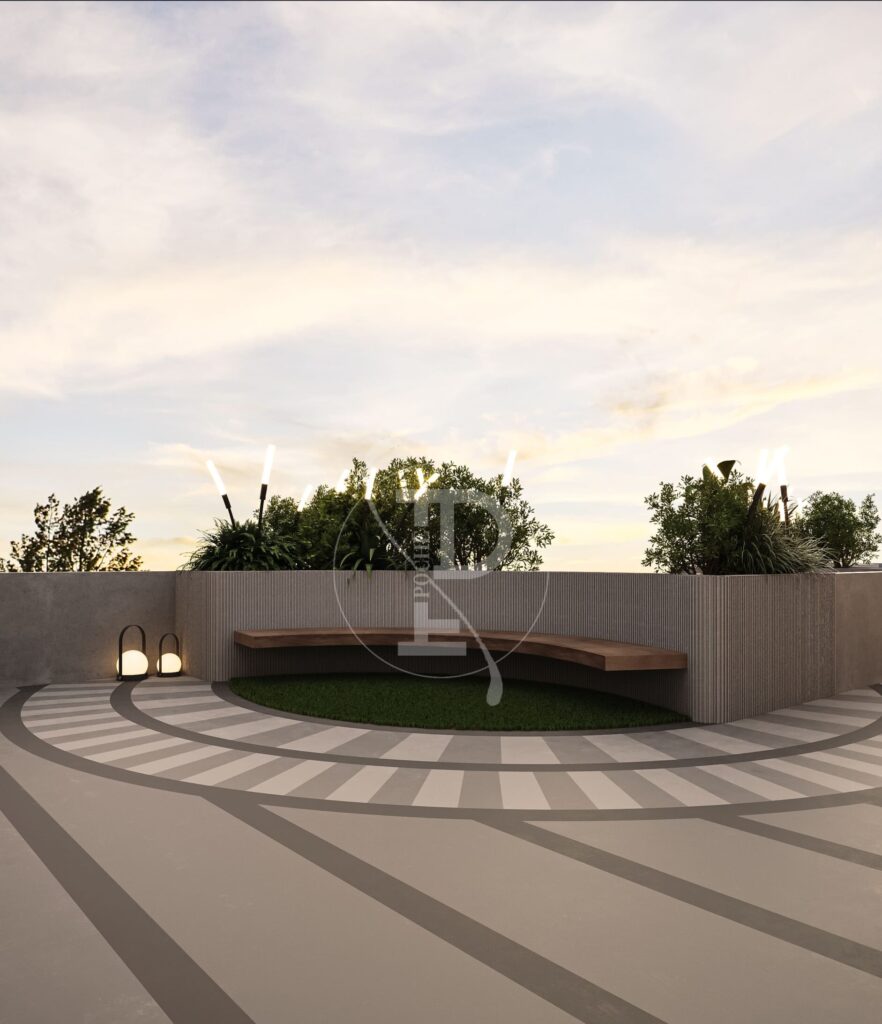
Privacy and screening
Most balconies in NCR towers overlook another balcony, and most terraces are overlooked from above. People do not sit in spaces where they feel watched.
Options that work: a jaali or perforated screen, which gives privacy while letting air through; planting in raised troughs, which is the softest solution; bamboo or reed screening on a railing, which is inexpensive and effective; and a pergola with a climbing plant, which handles overhead views.
A solid wall or glass screen blocks the view and blocks the breeze, which on a Delhi evening is the thing you actually came outside for. Perforation beats solidity here.
Planting that survives
Terrace planting in Delhi has to handle 45°C in June and 4°C in January, in shallow soil, in wind.
What works: bougainvillea, frangipani, hibiscus, oleander, curry leaf, lemongrass, adenium, succulents, and most palms. Structural plants in large pots do more than many small ones — one substantial plant in a good pot beats a row of small ones on a ledge.
Use large pots, because small ones dry out within hours in summer. Raise them on feet so water drains and the pot does not sit in a puddle. And install drip irrigation if the planting is significant — terraces die in the week you go on holiday.
Check the structural load if you are adding raised beds or large planters. Wet soil is heavy, and a terrace slab was designed for a specific load.
Balconies in apartments
Smaller, and easier to get right because the interventions are cheaper.
Outdoor-rated flooring or deck tiles, a screen or planting for privacy, one comfortable seat and a small table, a wall-mounted light, and a socket. That package converts the least-used square footage in a flat into the most-used.
Check society rules before enclosing or glazing a balcony — most NCR societies prohibit changes to the facade, and an enclosure done without permission is a problem at resale. A retractable blind on the inside face is usually permitted where a glass enclosure is not.
The details worth specifying
- Outdoor-rated light fittings with a sealed gasket, not indoor fittings used outside
- Weatherproof socket with a flap
- A hose tap
- Galvanised then powder-coated, or stainless, for any metalwork. Untreated mild steel rusts quickly here
- Performance outdoor fabric for cushions, and somewhere to store them
- A ceiling or wall fan under a covered area — it extends usable hours enormously
- A level threshold from inside to out where drainage allows. A single step down stops the flow between rooms more than its height suggests
Getting it right
We treat outdoor space as a room — drawn, detailed, with falls, drainage, waterproofing, lighting and power planned rather than added — because on most Delhi NCR homes it is the most underused area and the cheapest to transform.
If you have a terrace or balcony that goes unused, tell us about it. See also materials that survive the Delhi climate, jaali and screening, and our work.
About Pochē Aesthetics
Pochē Aesthetics is a luxury residential architecture and interior design practice based in Greater Kailash, New Delhi, founded by architect Niyati Satsangi. We design private homes — farmhouses, villas and apartments — across Delhi NCR and India, handling architecture, interiors, materials, lighting and styling as one connected commission. More about the practice.