Most people looking for an architect in Delhi are actually trying to answer a prior question: do I need one at all, or will a good contractor and a set of reference images get me there?
It is a fair question, and the honest answer depends on the project. Here is what an architect actually does on a house, when you genuinely need one, and how to choose between the firms you will meet.
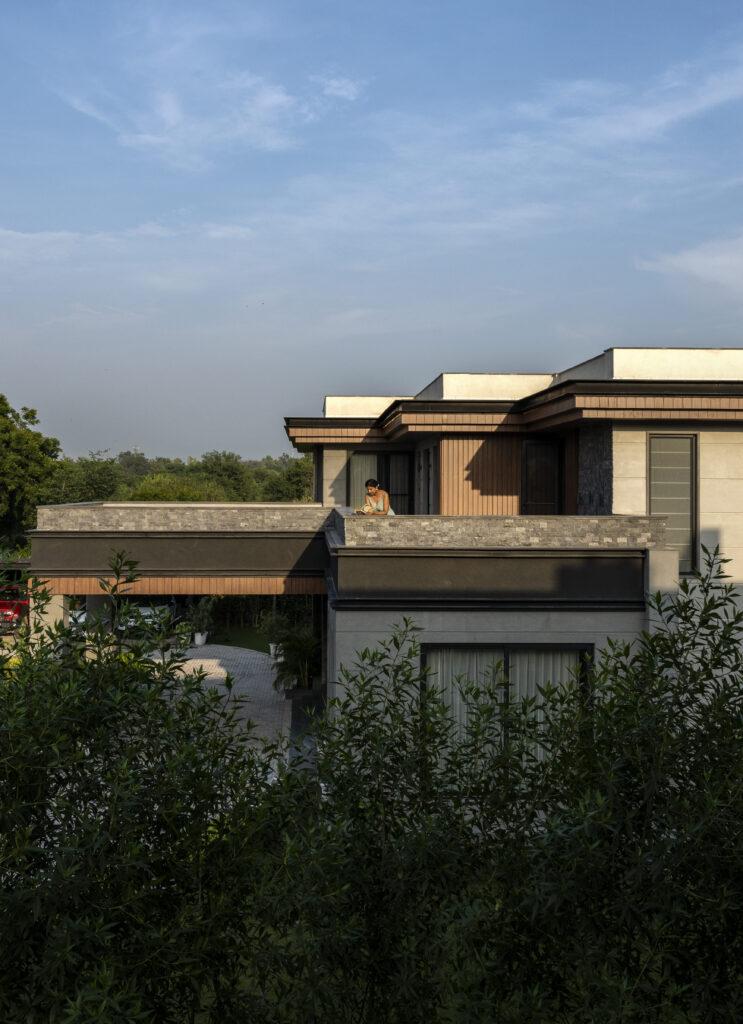
When you genuinely need an architect
Anything ground-up. A new house on a plot involves structure, approvals, setbacks, ground coverage, FAR, services, drainage and orientation. These are not decisions a contractor is trained to make, and they are all effectively permanent.
Anything structural. Removing a wall, adding a floor, opening up a facade, changing a stair. You need someone who can tell you what the building will allow and get a structural engineer to confirm it.
A difficult site. Narrow, sloping, awkwardly oriented, or hemmed in. This is where design earns its fee several times over.
Anything requiring sanction. Drawings submitted to MCD, DDA or the relevant authority have to be prepared by a registered professional.
When you may not
If you are refinishing a flat without moving a wall, and you can describe precisely what you want in enough detail that a contractor could build it without guessing, you may not need an architect — you may need a good interior designer, or possibly just a good contractor.
The catch is in that word “precisely”. Knowing what you want and being able to specify it are different skills. If you cannot close that gap, someone will — and if you have not hired anyone to, the contractor will close it for free, in their own taste, and you will live with every one of those decisions.
What an architect actually delivers
Not pictures. A drawing set. That is the product, and it is what separates firms:
- Site and survey analysis, orientation, sun and wind study
- Planning — the arrangement of rooms, circulation and light
- Structural coordination with an engineer
- Sanction drawings and liaison with the authority
- Working drawings — plans, sections, elevations at building scale
- Services coordination — electrical, plumbing, air conditioning, drainage
- Detail drawings for the junctions that matter
- Material specification
- Site supervision against all of the above
If a firm’s answer to “what do I receive?” is three-dimensional views and little else, you are buying renders. The contractor will still have to make several hundred decisions, and nobody will have drawn them.
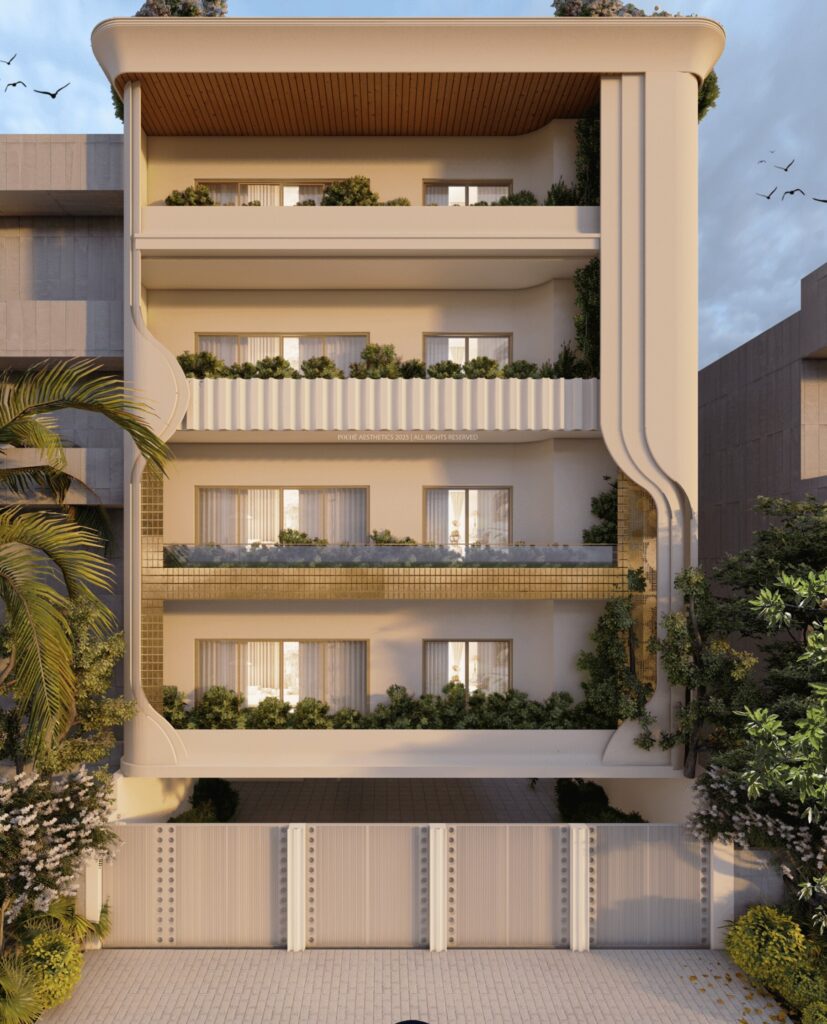
Architect, interior designer, or both
The distinction in India is blurrier in practice than in theory. Broadly: an architect is qualified and registered to design buildings and take them through sanction; an interior designer works within an existing shell. Many practices do both, and some designers work at a level of spatial sophistication that exceeds plenty of architects.
What matters for a house is that somebody is holding both. The most expensive pattern we see is sequential — an architect designs the shell, it gets built, and an interior designer is then brought in to work around fixed windows, set beam depths and services already run. Every interior decision becomes a workaround, and workarounds are where budgets quietly go.
Handled together, ceiling voids are sized for what will actually run through them, sills sit where the furniture wants them, and the staircase is designed rather than discovered.
How architects charge
Three common structures: a percentage of project cost, a rate per square foot, or a fixed fee for a defined scope. The percentage varies widely by firm, scope and project size, so treat any single figure you read online — including on competitors’ sites — as indicative at best.
What matters more than the number is what triggers each instalment. Fees tied to deliverables — concept approved, sanction submitted, working drawings issued, site handed over — align everyone. Fees tied to calendar dates do not.
Ask also whether site supervision is included and how often, because that is the line most commonly assumed by the client and excluded by the firm.
Choosing between firms
Ask to see a project of your type and size. A practice with twenty apartments behind it may never have run a ground-up house, and the skills are not interchangeable.
Ask who will actually run it. In larger offices the person who wins the work is rarely the person who draws it. Get the project lead’s name and ask how many other jobs they are carrying.
Ask to visit built work. Photographs are directed. A house you can walk through tells you about proportion, light and detailing in a way images cannot.
Ask to speak to a client whose project finished two years ago. Not two months. Problems with waterproofing, joinery and finishes surface in year two.
Ask about approvals in your jurisdiction. Delhi, Gurgaon and Noida each have their own rules and their own rhythms. A firm that has done it before is worth a great deal.
Ask what is excluded. The gap between a fee and the final spend is where most disputes begin.
A realistic timeline
For a ground-up house in Delhi: design and approvals four to seven months, construction fourteen to twenty, interiors six to nine partly overlapping, landscape finishing last. Two to two and a half years from first meeting to moving in. Any firm promising dramatically less is either unusually good or not being straight with you.
Working with us
Pochē Aesthetics is an architecture and interior design practice in Greater Kailash, New Delhi, founded and led by architect Niyati Satsangi. We specialise in luxury residential — farmhouses, villas, builder floors and apartments across Delhi NCR — and we take architecture and interiors as one commission rather than two appointments. We also take on a select number of restaurant and commercial projects.
If you are planning a house, tell us about the site. See also architect versus interior designer, the questions worth asking any firm, and what building a house costs.
About Pochē Aesthetics
Pochē Aesthetics is a luxury residential architecture and interior design practice based in Greater Kailash, New Delhi, founded by architect Niyati Satsangi. We design private homes — farmhouses, villas and apartments — across Delhi NCR and India, handling architecture, interiors, materials, lighting and styling as one connected commission. More about the practice.
Pingback: Villa Construction Cost in India | Full 2026 Breakdown