Bathrooms carry the highest cost per square foot of any room in a house, and the highest risk. Everything in them is wet, everything is hidden behind tile, and the consequences of doing it cheaply arrive two years later as a stain on someone’s ceiling.
Here is what a bathroom renovation actually costs in India, what the money buys, and the three places where saving is a false economy.
The broad bands
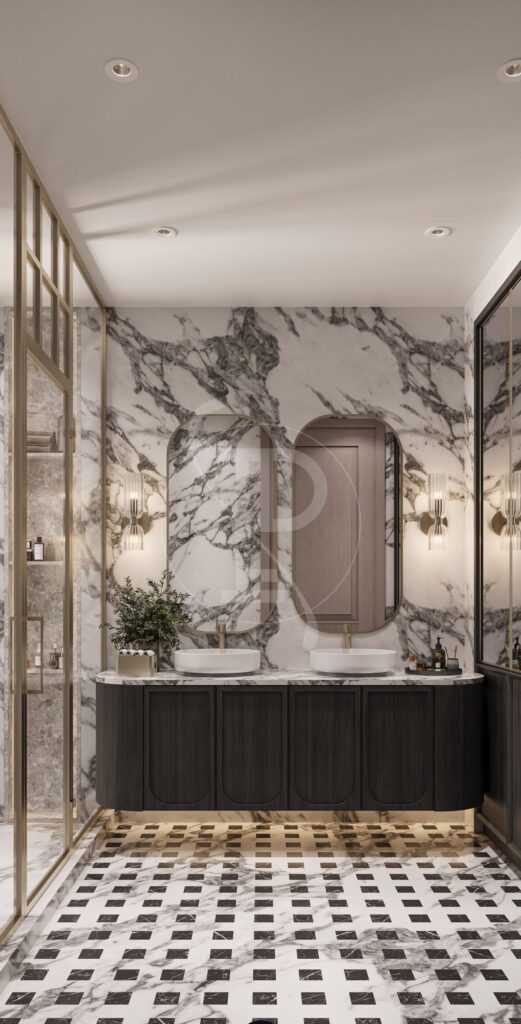
For a full strip-back and rebuild of a standard 40 to 60 sq ft bathroom — demolition, waterproofing, plumbing, tiling, sanitaryware, fittings, vanity, glass and lighting:
- Basic — standard tile, entry sanitaryware and fittings, simple vanity
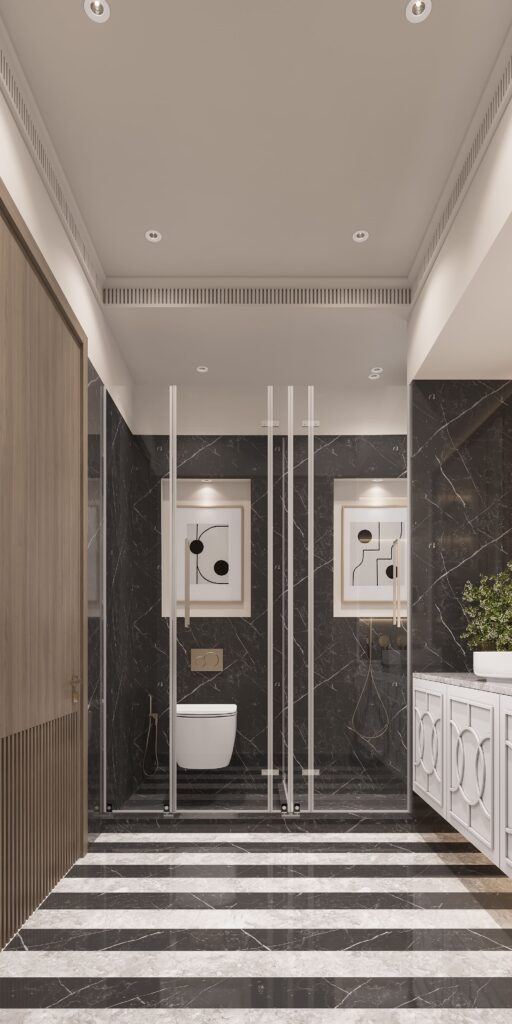
- Mid to upper — larger-format tile or Indian stone, branded sanitaryware, good fittings, decent vanity joinery, shower glass
- Luxury — stone on walls and floor, premium or imported fittings, bespoke vanity, niches, layered lighting, frameless glass. A large master bathroom at this level is a substantial project in its own right
A master bathroom with a freestanding tub, a walk-in shower, twin vanities and stone throughout is a different project from a guest toilet, and the range reflects that.
Where the money goes
The hidden half
Demolition, debris removal, plumbing first fix, waterproofing, screed and levelling typically account for a third of the cost before a single visible material is bought. It buys you nothing you can photograph and everything that determines whether the room survives.
Surfaces
Usually the largest visible line. Bathroom walls are tiled or clad floor to ceiling, so the surface area is far greater than the floor plan suggests — a 50 sq ft bathroom can carry 200 sq ft of wall. That multiplier is why a material upgrade costs more here than anywhere else.
Sanitaryware and fittings
The range is enormous. A concealed cistern with a wall-hung WC costs several times a standard floor-mounted unit, and needs a wall built for it. Thermostatic shower systems cost several times a simple mixer. All are legitimate choices; just know which you have been quoted.
Vanity, glass and mirror
Vanity joinery has to be built for a wet room — marine ply or a waterproof substrate, not ordinary carcass material. Frameless shower glass costs more than framed, and toughened glass with a factory-applied protective coating costs more again. In NCR’s hard water, that coating is the difference between clear glass and permanently etched glass.
The three false economies
Waterproofing. A proper membrane, taken up the walls and well up inside the shower, with a flood test before tiling. If a contractor offers to skip the flood test to save two days, decline. A leak into the flat below is not a snag; it is a dispute with a neighbour and a bathroom demolished twice.
Falls and drainage. The floor must fall correctly to the drain, and the shower area must fall independently. Water that pools is water that will eventually find the waterproofing’s weakest point. This is craftsmanship, not material, and it is why the cheapest labour is rarely cheapest.
Concealed plumbing quality. Anything buried in a wall should be the best you can afford, because reaching it again means breaking finished stone. Visible taps can be replaced in an afternoon; a concealed valve cannot.
Decisions that save real money
Do not move the plumbing. Keeping the WC and drain where they are saves a great deal. Moving a WC means new soil drainage, which in an apartment is constrained by the stack and sometimes simply impossible.
Use one material well. A single stone or tile on floor and walls, laid with careful setting-out, reads more expensive than three materials fighting each other — and costs less.
Build niches instead of buying racks. A recessed niche in the shower wall costs almost nothing at construction stage, looks considered, and removes the need for hardware that will corrode.
Skip the bathtub you will not use. A tub consumes floor area, costs money to install and plumb, and in most Indian homes is used a handful of times a year. A larger, better shower is usually the better room.
Hard water — the NCR-specific problem
Groundwater across most of Delhi NCR is hard. It scales taps, marks glass, and shortens the life of every fitting in the room. Installing a water softener is the actual solution; everything else is mitigation. Plan its location and plumbing at first fix rather than retrofitting a unit into a corner later.
It also argues for chrome over matt black and brushed brass. The darker and warmer finishes look superb and show every water spot — fine if someone wipes them daily, frustrating otherwise.
Timeline
A full bathroom rebuild runs four to seven weeks. Demolition and first fix take about two, waterproofing and curing another one to two — which cannot be compressed — then tiling, fitting and glass. Shower glass is measured only after tiling, and takes a further one to two weeks to arrive.
If several bathrooms are being done, sequencing them rather than opening all at once keeps at least one usable and does not lengthen the programme as much as people expect.
Getting it right
We draw bathrooms fully — wall elevations with tile setting-out, niche positions, fitting heights, falls and the waterproofing detail — because these rooms carry the most cost and the most risk in a house, and deserve the most drawing.
If you are planning one, tell us about it. You may also want our guide to luxury bathroom design, which materials survive the Delhi climate, and what renovation really involves.
About Pochē Aesthetics
Pochē Aesthetics is a luxury residential architecture and interior design practice based in Greater Kailash, New Delhi, founded by architect Niyati Satsangi. We design private homes — farmhouses, villas and apartments — across Delhi NCR and India, handling architecture, interiors, materials, lighting and styling as one connected commission. More about the practice.
Pingback: Luxury Bathroom Design India | Planning & Materials Guide