Every joinery quote in India asks you to choose between them, usually with a price difference large enough to matter across a whole house. The salesman will tell you veneer is premium and laminate is practical, which is true but not useful.
The veneer vs laminate decision is really about three things: where the surface is, how it will be used, and whether you want it to age or stay the same. Here is how we decide.
What they actually are
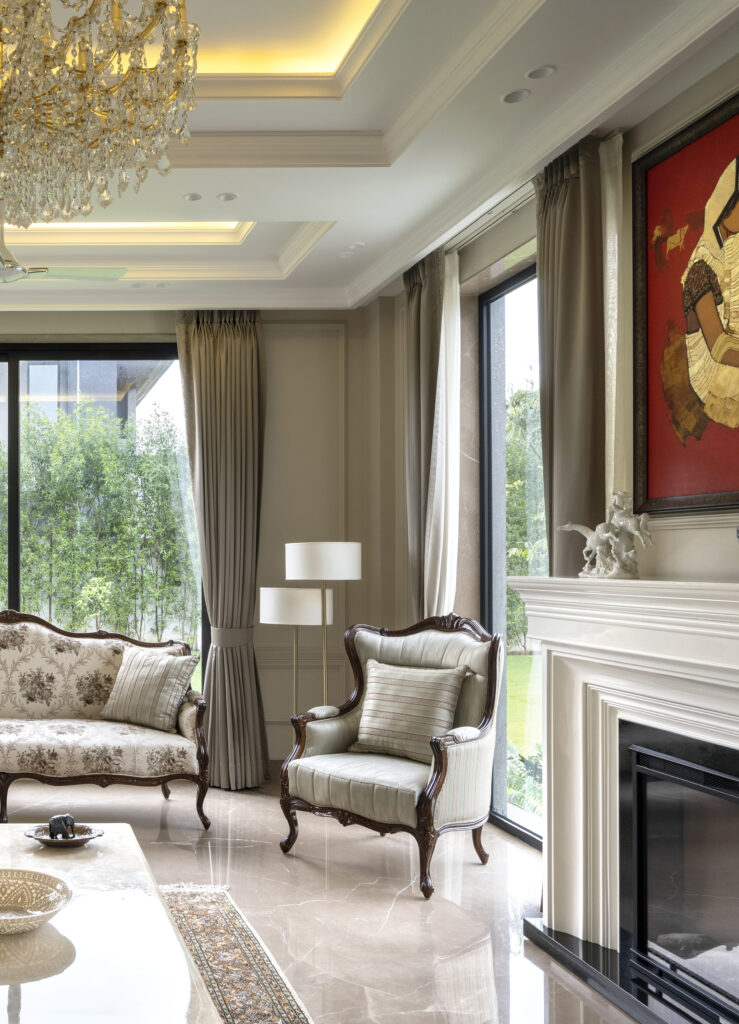
Veneer is real wood — a thin slice of timber, usually 0.5 to 0.6 mm, glued to a plywood or MDF base and then polished on site. Because it is genuine wood, every sheet differs, it takes a stain, and it can be sanded and re-polished years later.
Laminate is layers of kraft paper impregnated with resin and pressed under heat, with a decorative printed layer on top. It is a photograph of wood, plastic all the way through, and it comes off the shelf finished.
Durability: laminate wins clearly
This is not close. Laminate is harder, more scratch-resistant, waterproof at the surface, and unaffected by heat from a mug. A good 1 mm laminate will look the same in ten years as it did on day one.
Veneer is real wood with a polish over it. It scratches. It marks if water sits on it. It fades in direct sunlight, sometimes dramatically — a veneer panel half-covered by a curtain for two years will show the line.
The counter-argument is that veneer can be repaired. A scratched veneer panel can be sanded and re-polished. A scratched laminate is scratched forever.
Appearance: veneer wins clearly
Laminate has improved enormously, and a good one at arm’s length is convincing. Up close, two problems remain.
The first is repetition. A printed sheet has a repeat, usually every 1.2 metres or so. On a large wardrobe run the same knot appears three times and the eye catches it.
The second is depth. Real wood has grain that runs through the material and catches light differently as you move. A print cannot do this. In a bright room, particularly under directional light, the difference is obvious.
Veneer also allows something laminate cannot: matching. Leaves from the same log can be book-matched so the grain mirrors across a joint, or sequence-matched so it runs continuously across a whole wall. In a formal drawing room or a headboard wall, that is the detail that makes joinery look commissioned rather than bought.
Cost, realistically
Laminate is cheaper on material and much cheaper on labour, because it arrives finished. Veneer needs to be laid, sanded, stained and polished on site — typically three to four coats with sanding between — and that is skilled work over several days.
As a rough guide, a veneered and polished surface runs two to three times the installed cost of a laminated one. The gap is in the finishing, not the sheet.
There is also a hidden cost: veneer polishing is wet work that has to happen on site, generates dust and fumes, and holds up everything else in that room.
Where we specify each
Veneer
- Feature walls and headboard panelling
- Drawing room and dining joinery — the pieces people look at
- Wardrobe shutters in a master bedroom
- Doors, particularly where they read as part of a panelled wall
- Anywhere the grain needs to run continuously across several panels
Laminate
- Kitchen shutters — heat, steam, oil and daily cleaning
- Wardrobe and cabinet interiors, always
- Children’s rooms and study desks
- Utility, store and staff areas
- Bathroom vanities, where a compact laminate or acrylic is the sensible choice
- Any horizontal surface that takes wear — a desk top, a shelf you put things down on
A sensible hybrid
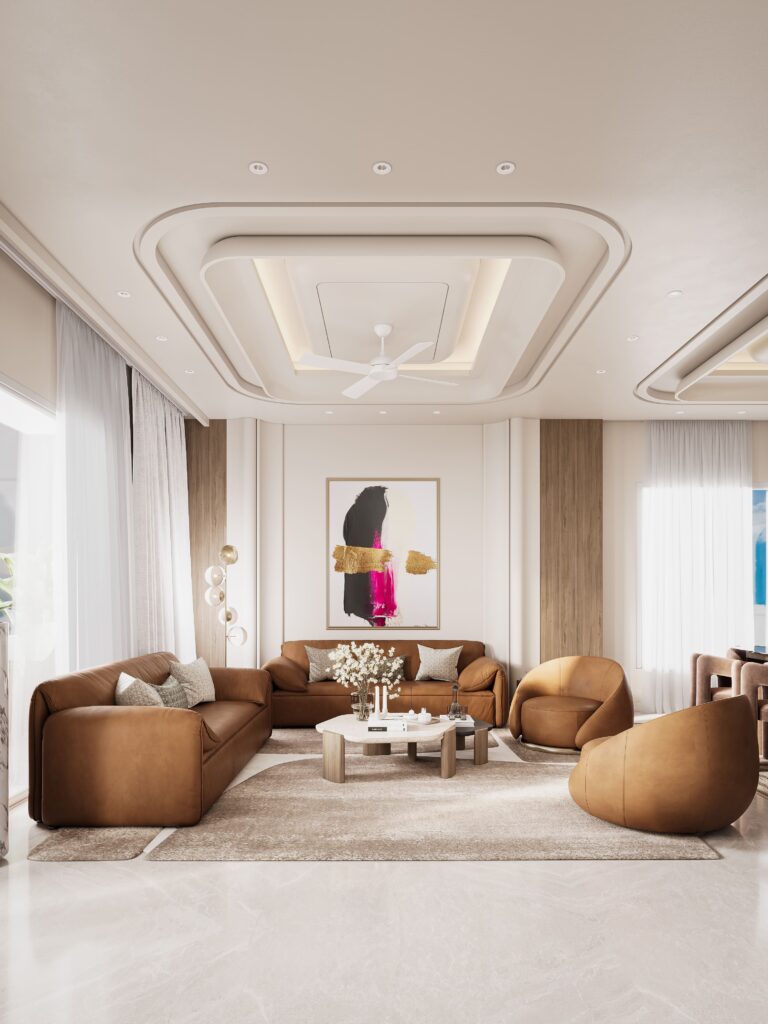
The approach we use on most projects: veneer on the vertical surfaces people see, laminate on everything horizontal and everything inside. Nobody opens a wardrobe and admires the interior finish, and a light-coloured laminate inside is easier to find things in.
This typically brings the cost close to a full laminate job while the rooms read as veneered.
Getting veneer right
If you are paying for veneer, these details decide whether it looks expensive:
- Buy the whole job from one log. Veneer is sold in bundles from a single tree. Buy enough at once, including spare. Two bundles bought a month apart will not match
- Agree the match — book-matched, slip-matched or sequence-matched — and have the carpenter lay the leaves out for approval before gluing
- Specify the polish. Matte or satin PU looks considerably more refined than high gloss and hides marks better. Melamine is cheaper and less durable
- Protect from sun. Direct sunlight on veneer will bleach it. If a panel faces a west window, a UV-resistant topcoat is worth asking for
- Edges. Veneer must be lipped on exposed edges with solid timber, not folded round. A folded edge chips within a year
Getting laminate right
- Use 1 mm for shutters and exposed surfaces, 0.8 mm only for internals
- Choose a matte or textured finish — high gloss laminate shows every fingerprint and swirl mark
- Balance the panel: laminate both faces of a shutter, even the hidden one, or it will bow
- Insist on matching edge-banding of the same thickness, properly glued
- On large runs, ask to see the repeat before ordering
The honest summary
If the surface is seen and rarely touched, veneer. If it is touched daily, gets wet, or lives inside a cupboard, laminate. Most good joinery in a luxury home is both, used deliberately.
We specify these room by room rather than applying one rule across a house. See how we handle interiors and joinery, browse homes we have delivered, or tell us about your project.
About Pochē Aesthetics
Pochē Aesthetics is a luxury residential architecture and interior design practice based in Greater Kailash, New Delhi, founded by architect Niyati Satsangi. We design private homes — farmhouses, villas and apartments — across Delhi NCR and India, handling architecture, interiors, materials, lighting and styling as one connected commission. More about the practice.