“Turnkey” is the most used and least defined word in Indian interiors. Every firm offers it, almost none of them mean the same thing by it, and the gap between what a client assumes and what the contract says is where most disputes begin.
Here is what turnkey interior design actually means, what it includes and excludes, and when it is the right model for your home.
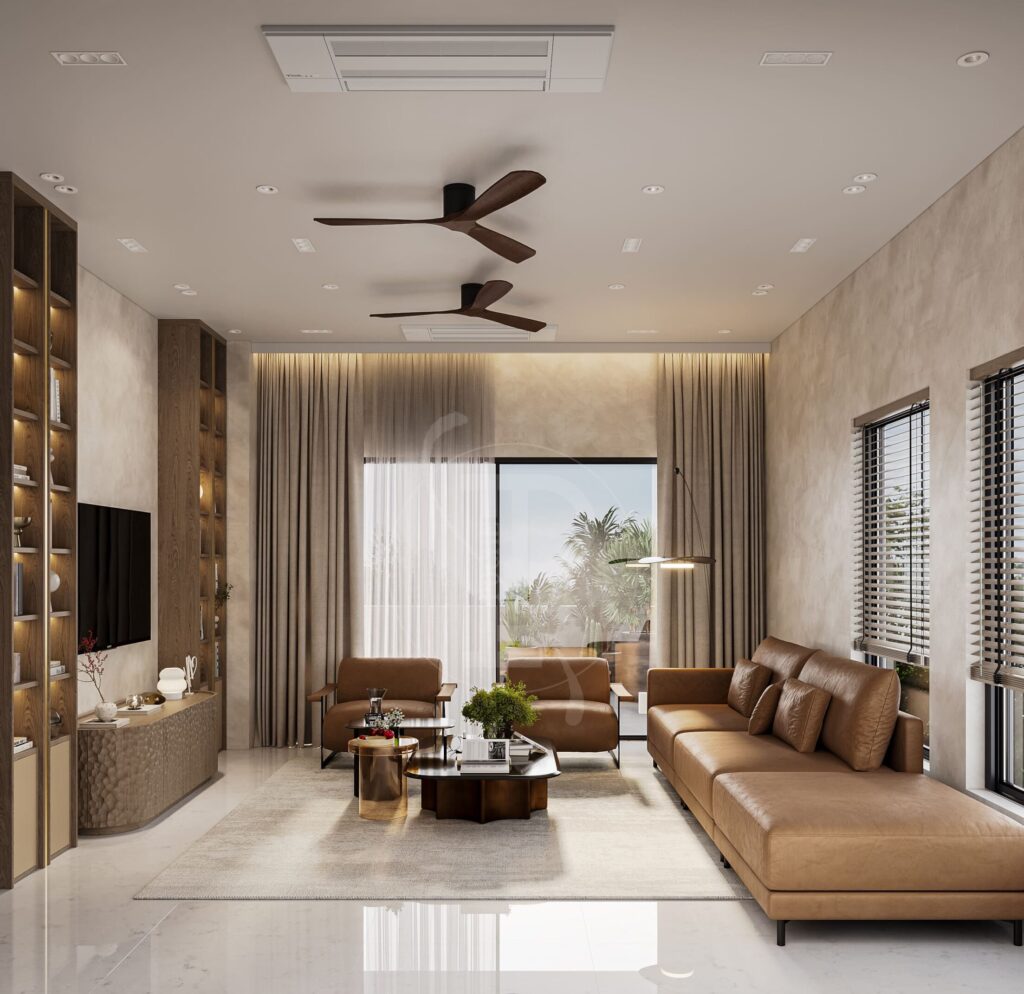
The literal meaning
Turnkey means you hand over the keys and get them back with the home complete — design, procurement, execution and handover under one contract, with one party accountable and one price.
That is the promise. The reality depends entirely on where the contract draws its boundaries, and the boundaries move from firm to firm.
What is usually included
- Design and drawings
- Civil work — demolition, new partitions, plaster
- Electrical and plumbing within the defined scope
- False ceiling
- Flooring
- Fitted joinery — wardrobes, kitchen, vanities, media units
- Painting and polish
- Bathroom fittings and sanitaryware
- Project management and labour
What is usually not
This is the list that matters, and it is the one to get in writing before signing anything:
- Loose furniture — sofas, beds, dining tables, chairs. Frequently excluded, and a significant share of a home’s total spend
- Curtains and soft furnishings
- Appliances — hob, chimney, oven, refrigerator, washing machine
- Air conditioning, particularly ducted systems
- Art, plants, styling — the layer that makes a home feel finished
- Society charges — NOC deposits, debris removal, lift usage
- Structural work or anything requiring sanction
- GST
A turnkey quote that excludes furniture, curtains, appliances and air conditioning is not a finished home. It is a finished shell with joinery in it. That can be exactly what you want — but know which you are buying.
The three models sold as turnkey
1. Design-and-build practice
One firm designs and executes with its own teams. Genuinely single-point accountability, and the model works well at scale on large projects. The trade-off is that design and execution sit with the same party, so there is no independent check built into the process — worth asking how they handle their own quality control.
2. Platform or aggregator
A designer assigned from a pool, a catalogue of pre-costed finishes, and a process built around throughput. Fast, predictable, and genuinely useful at certain budgets and for standardised fit-outs. The constraint is the system: a brief that sits outside it usually costs more or gets steered back inside.
3. Contractor offering “turnkey”
A good contractor with a draughtsman, selling execution with drawings attached. This can work on a simple refurbishment where the layout is not changing. On anything that needs real design resolution, you are buying execution and hoping design happens along the way.

Turnkey versus design-only
Turnkey suits you if: you want one point of contact, you travel or cannot be on site, you value predictability over specificity, and you are comfortable choosing within a defined range.
Design-only suits you if: the plan needs to change, the house is large or the site is difficult, you want materials and detailing specific to you, you have a contractor you trust, or you want an independent party checking the execution.
There is also a middle route that suits a lot of people: a design practice produces the full drawing set and supervises, and a contractor executes under that supervision. You get resolved design and independent oversight, with the coordination handled for you. It is how most serious residential projects run.
Questions to ask before signing a turnkey contract
- What exactly is excluded? Ask for the written list
- Are the figures for materials actual selections or allowances? A low allowance will rise the moment you choose something you like
- What drawings do I receive, and do joinery drawings include internal sections and a hardware schedule?
- Which brands and grades — carcass ply, hardware, sanitaryware — named in writing?
- Who is the project lead, and how many other projects are they running?
- How are variations priced and approved?
- What triggers each payment — deliverables or dates?
- What is the defect liability period and what does it cover?
- Will I see supplier invoices, or is this a single bundled price?
- What is the penalty or remedy if the programme slips?
That last one tells you a lot. A firm confident in its programme will discuss it; a firm that deflects is telling you something.
The single biggest risk, and how to remove it
The risk in turnkey is not dishonesty. It is that the quote you compared and the home you receive were never the same thing, because the specification was never written down precisely enough to hold anyone to.
The fix is unglamorous: insist on a specification schedule naming actual products — brand, model, finish, size — and a written exclusions list, attached to the contract. With those two documents, turnkey is a genuinely good model. Without them, the price on the cover page is an opening position.
How we work
Pochē Aesthetics is an architecture and interior design practice in Greater Kailash, New Delhi. We are not a turnkey company: we design, we specify in writing, and we supervise execution — which means someone independent of the contractor is checking the work on your behalf. We are happy to work with your contractor or help you appoint one.
If you are weighing turnkey against design-led for your own home, tell us about the project and we will give you a straight view of which suits it. See also designer versus contractor versus turnkey, how to read a quotation, and what a drawing set should contain.
About Pochē Aesthetics
Pochē Aesthetics — also written Poche Aesthetics — is a luxury residential architecture and interior design practice based in Greater Kailash, New Delhi, founded and led by architect Niyati Satsangi. Over more than twelve years the practice has designed private homes — farmhouses, villas, builder floors and apartments — across Delhi NCR and India, handling architecture, interiors, materials, lighting and styling as one connected commission, alongside select restaurant and commercial work. More about the practice.