Wooden flooring is the finish clients ask for most and hesitate over longest, usually because someone has told them it will not survive an Indian summer. That depends entirely on which kind you buy.
Here is what actually works underfoot in an Indian home — the four types, what each costs you in maintenance, and where wood is the wrong answer.
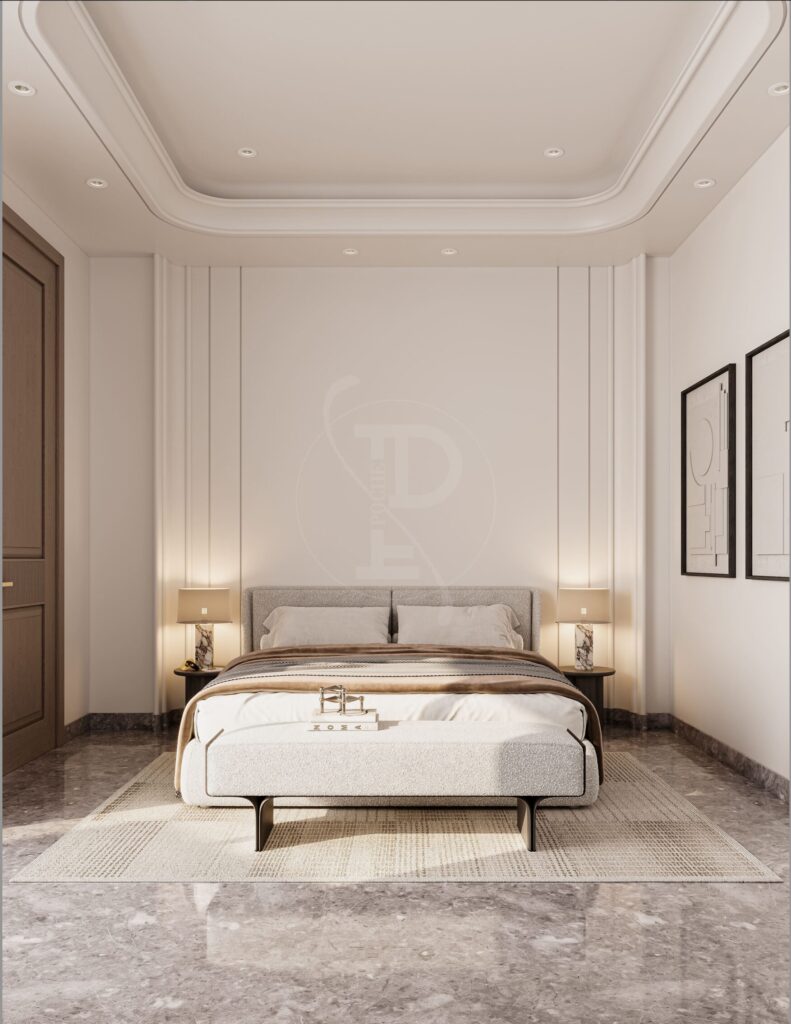
The four types, and which survives here
Engineered wood — the one we specify most
A real hardwood top layer bonded to cross-laminated plywood underneath. The cross-ply construction is the whole point: it resists the expansion and contraction that destroys solid wood in a climate that swings from near-desert in May to 80 per cent humidity in August.
Look for a wear layer of at least 3mm, ideally 4mm, because that determines whether it can be sanded and refinished later. A 0.6mm veneer top layer cannot be refinished and is really a laminate wearing a wood coat.
Solid hardwood — beautiful and demanding
A single piece of timber throughout. It can be refinished many times and it ages better than anything else. It also moves with the seasons — gaps open in winter, boards tighten in monsoon.
It is possible in India, but it needs acclimatisation on site before laying, a proper expansion gap at every perimeter, and a client who accepts that a timber floor is a living material. In an apartment with ducted air conditioning running half the year, the humidity swing is less severe and solid wood behaves better.
Laminate — avoid where water can reach
A photographic print of wood over a fibreboard core. Inexpensive and surprisingly convincing to look at. The problem is the core: it absorbs water readily and tends not to recover once it has, and a swollen plank usually cannot be saved.
Fine in a bedroom in a dry home. A poor choice anywhere near a kitchen, a bathroom door, or a balcony that takes monsoon rain.
Luxury vinyl and SPC — the pragmatic option
Rigid-core vinyl planks are genuinely waterproof, dimensionally stable, warm underfoot and increasingly convincing. They are not wood and a trained eye will know, but in a utility area, a child’s room or a rental property they solve a real problem.
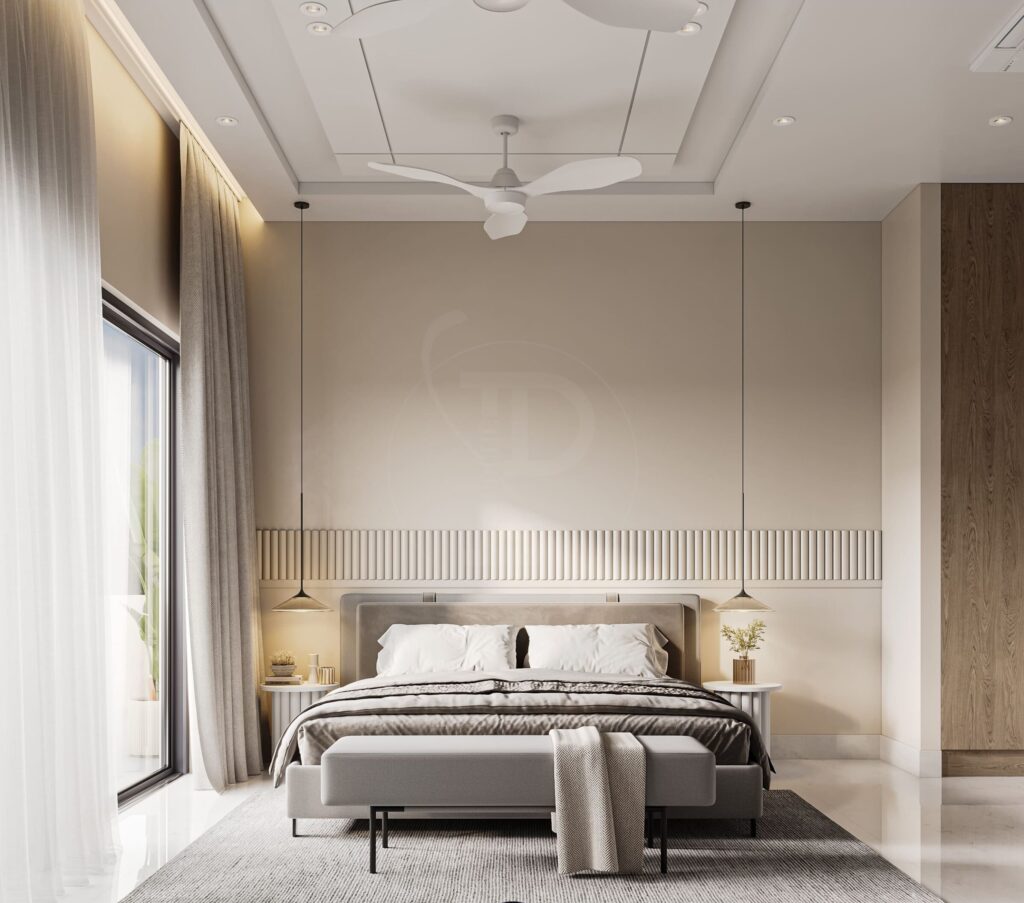
Where to use wood, and where not to
Use it in bedrooms. This is where wood earns its keep — warm underfoot first thing in the morning, quieter than stone, and the room you are most often barefoot in. If you are only doing wood in part of the house, do the bedrooms.
Consider it in a study or a dressing room. Both are low-traffic, dry, and benefit from the warmth.
Think hard about living and dining rooms. High traffic, chairs scraping, spills. Possible with a hard-wearing finish and felt pads under every leg, but it will show life sooner than stone.
Do not use it in bathrooms, kitchens, balconies or entrances. There are better materials, and water will find the joints.
Finish matters as much as species
Matt or natural oil finishes hide dust, scratches and footprints far better than gloss. In Delhi this is not a style preference, it is a maintenance decision — a glossy dark floor looks superb for about two hours after mopping.
Lighter tones and visible grain conceal dust better than dark, uniform floors. Mid-brown oak with open grain is forgiving in a way that dark walnut is not.
Brushed or wire-brushed textures hide wear in the grain rather than showing it on a flat surface.
UV-cured lacquer is harder and lower-maintenance; oil finishes look and feel better and can be spot-repaired, but need re-oiling every year or two. Choose honestly based on whether anyone in the house will actually re-oil it.
The practical details
- Acclimatise the material on site for several days before laying. Skipping this is the most common cause of movement later
- Expansion gap at every wall and every fixed element, covered by skirting — not filled with adhesive
- Check the subfloor is level. Older Delhi buildings are rarely built to modern tolerances, and a wooden floor over an uneven slab will flex and creak
- Underlay for acoustics, particularly in an apartment where your floor is someone’s ceiling
- Threshold details where wood meets stone or tile. A well-made flush threshold is the difference between a considered floor and a visibly patched one
- Felt pads under every chair and table leg, from day one
- Order 7 to 10 per cent extra and keep the surplus boxed. Batches vary, and you will want matching material for a repair in year five
Living with it in Delhi
Sweep or vacuum rather than wet-mopping. Where you do mop, use a barely damp cloth — standing water at a joint is what causes damage. Rugs at the entrance keep grit off the floor, and grit is what actually scratches timber.
Keep direct sun off it where you can. Indian sun fades timber faster than people expect, and an unshaded west-facing room will show a clear line where a rug has been.
The honest summary
Engineered wood with a thick wear layer, in a matt finish, in the bedrooms, on a level subfloor, with proper expansion gaps. That specification works in Indian homes and keeps working. Most of the disappointment people report with wooden floors traces back to one of those five things being skipped.
If you are choosing floors for your own home, tell us about it. See also marble versus granite, which materials survive the Delhi climate, and master bedroom planning.
About Pochē Aesthetics
Pochē Aesthetics is a luxury residential architecture and interior design practice based in Greater Kailash, New Delhi, founded by architect Niyati Satsangi. We design private homes — farmhouses, villas and apartments — across Delhi NCR and India, handling architecture, interiors, materials, lighting and styling as one connected commission. More about the practice.