A luxury bathroom is not a bathroom with expensive taps in it. It is a small room where light, stone, water and air have all been thought about, and where nothing you touch feels like a compromise.
Here is how luxury bathroom design actually works — the planning, the materials that survive Indian water, and the details that separate a considered bathroom from an expensive one.
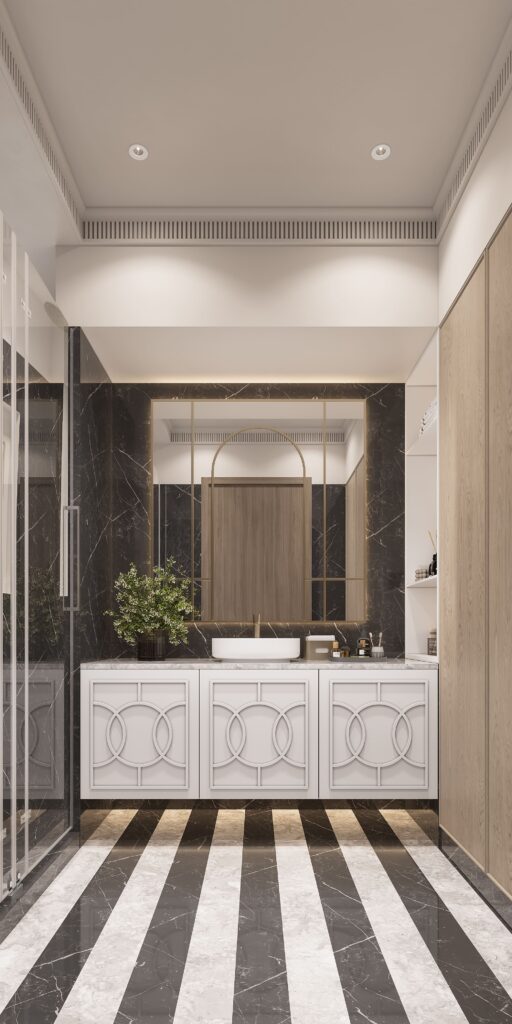
Start with the plan, not the finishes
The zones in a good bathroom are separated: wet, vanity, and WC. In a master bathroom that usually means a walk-in shower behind glass, a vanity run with generous counter, and the WC screened or in its own compartment.
Useful dimensions:
- Shower: 900 x 900mm is the workable minimum; 1,200 x 900mm is comfortable; 1,500mm wide reads generous and lets you avoid a door entirely with a fixed screen
- Vanity: 850 to 900mm counter height. The old 800mm standard is too low for most adults
- Twin basins need 1,800mm of counter minimum, otherwise you have two cramped basins instead of one good one
- WC: 800mm clear width and 600mm clear in front
- Circulation: 900mm clear between fittings
If the room cannot take all three zones properly, the honest answer is a better shower and a single excellent basin rather than a cramped version of everything.
The material decisions
Use one material well. A single stone or large-format tile on floor and walls, laid with careful setting-out, reads more expensive than three materials competing — and usually costs less. The luxury is in the setting-out, not the variety.
Honed rather than polished. Polished stone in a bathroom shows every water mark and is slippery wet. Honed reads softer, hides marks and is safer underfoot.
Be careful with very white porous marble at the wet end. Statuario and Calacatta are beautiful and soft. They stain and etch. Superb on a vanity or a dry wall; questionable on a shower floor in daily use.
Remember the wall multiplier. A 50 sq ft bathroom can carry 200 sq ft of wall surface. A material upgrade bites harder here than anywhere else in the house — which is also why choosing one good material rather than a feature wall of something exotic is usually the better spend.
Hard water is the governing condition in Delhi NCR
This is the part that separates bathrooms that still look good in year five from bathrooms that do not.
Install a softener. Everything else is mitigation; this is the actual solution. It protects taps, shower glass, sanitaryware and the kitchen at the same time. Plan its location and plumbing at first fix.
Specify coated shower glass. A factory-applied protective coating on toughened glass. Untreated glass in hard water tends to etch, and once it has, there is no cleaning it back — only replacement.
Choose finishes with the water in mind. Chrome is the most forgiving. Matt black and brushed brass look superb and show every water spot; they are fine if someone wipes them daily and frustrating otherwise. This is a lifestyle decision more than an aesthetic one.
Seal stone on installation and reseal annually.
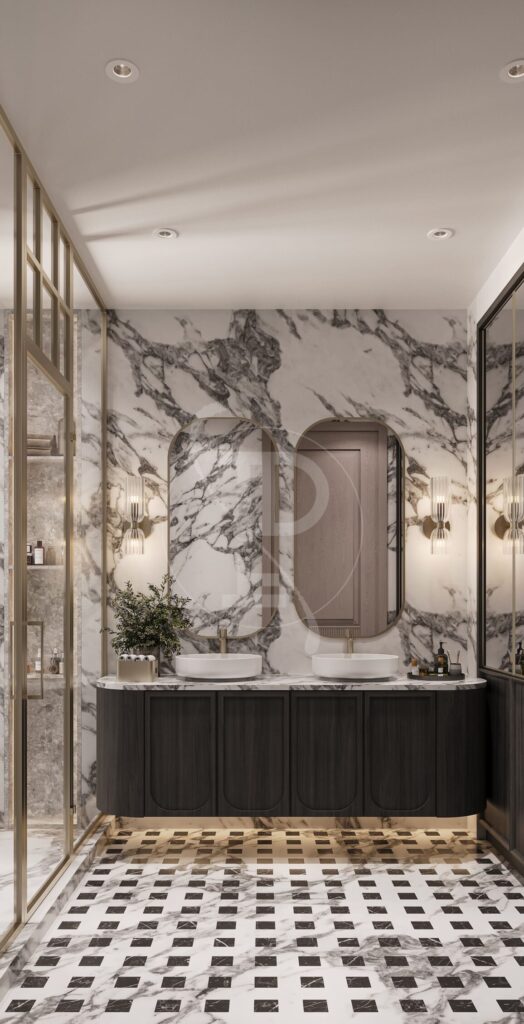
Light, which almost every bathroom gets wrong
A single downlight in the centre of the ceiling puts your face in shadow at the mirror. That is the one place in the room where light actually matters.
What works: light at face height flanking the mirror, or a diffused vertical source either side — not above. Then a separate low-level or cove light for the room, dimmable, so the bathroom at 6am and at 11pm are not the same brightness. A sensor-triggered night light at skirting level is a small cost and disproportionately appreciated.
Keep everything at 2700K. And if there is any natural light at all, plan the room around it — a bathroom with daylight is worth more than one with an extra square metre.
The details that make it feel resolved
- A recessed niche in the shower wall, lit, sized for real bottles. Costs almost nothing at construction stage and removes the need for hardware that will corrode
- A concealed cistern with a wall-hung WC — cleaner line, easier to clean under, and it needs a wall built for it
- A linear drain rather than a centre gully, which allows a single-direction fall and larger floor pieces
- A thermostatic shower valve, so the temperature does not change when someone opens a tap elsewhere
- Heated towel rail — genuinely useful in a Delhi January, and it keeps towels dry through the monsoon
- A stool or bench in a large bathroom. Somewhere to sit, somewhere to put a towel
- Extraction that actually works, ducted out rather than into the ceiling void
- Vanity built for a wet room — marine ply or a waterproof substrate, never ordinary carcass material
The three things not to economise on
Waterproofing. A proper membrane, taken well up the walls and higher inside the shower, with a flood test before tiling. If someone offers to skip the test to save two days, decline.
Falls. The floor must fall correctly to the drain and the shower must fall independently. Water that pools will find the weakest point in the waterproofing eventually. This is craftsmanship rather than material.
Concealed plumbing. Anything buried in a wall should be the best you can afford, because reaching it again means breaking finished stone.
Should you put in a bathtub?
Honestly, in most Indian homes: no. A tub consumes significant floor area, costs money to install and plumb, and gets used a handful of times a year. A larger and better shower is usually the better room.
The exception is a genuinely large master bathroom where the tub is a sculptural object with a view, and where somebody in the house will actually use it. If it is going in because luxury bathrooms have tubs, leave it out and spend the money on stone and glass.
Getting it right
We draw bathrooms fully — wall elevations with stone setting-out, niche sizes and positions, every fitting height, falls, and the waterproofing detail — because these rooms carry the most cost and the most risk per square foot in a house.
If you are planning one, tell us about it. See also what a bathroom renovation costs, which materials survive Delhi, and realistic cost ranges for Delhi NCR.
About Pochē Aesthetics
Pochē Aesthetics is a luxury residential architecture and interior design practice based in Greater Kailash, New Delhi, founded by architect Niyati Satsangi. We design private homes — farmhouses, villas and apartments — across Delhi NCR and India, handling architecture, interiors, materials, lighting and styling as one connected commission. More about the practice.
Pingback: Bathroom Renovation Cost in India | Realistic 2026 Ranges